Incredibly Realistic Water Text in Cinema 4D and PhotoshopListThumbs

Incredibly Realistic Water Text in Cinema 4D and Photoshop
Yesterday it was raining and I decided to create a water effect. I didn't know what to do then I saw the desktop wallpaper I'm using, a image from the depthCORE Heist chapter created by Sumeco that we used of the Wallpaper of the Week 43. To create the effect, I had to use Adobe Photoshop, Illustrator and Maxon Cinema 4D.
So, in this tutorial I will show you how to create a water text effect. Even though it might look compex it's a very simple effect. We will use Illustrator for the text, then Cinema 4D to make it a 3D text and Photoshop to mix the 3D with some real photos to create a nice and realistic result.
Step 1
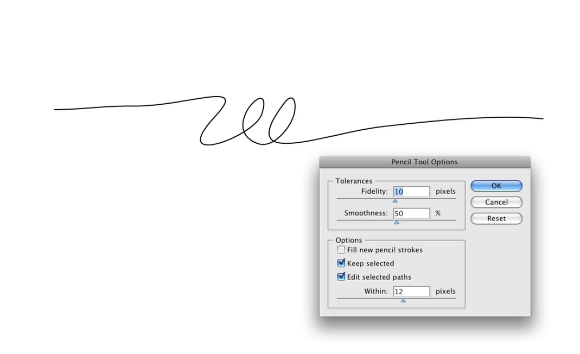
The first thing to do is create a hand writing with the text you want to use for the effect. I used Adobe Illustrator to write the text. Using the Pencil Tool (N), double click its tool icon to open the Pencil Tool Option. Use 10 pixels for the Fidelity and 50 % for the Smoothness. Save the Illustrator file, we will import it in Cinema 4D.
Step 2
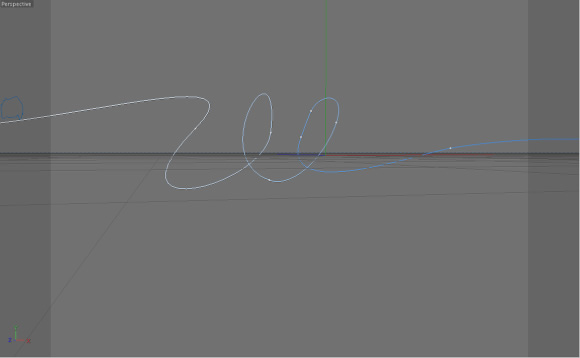
Open Maxon Cinema 4D and go to File>Merge. Select the Illustrator file to import it.
Step 3
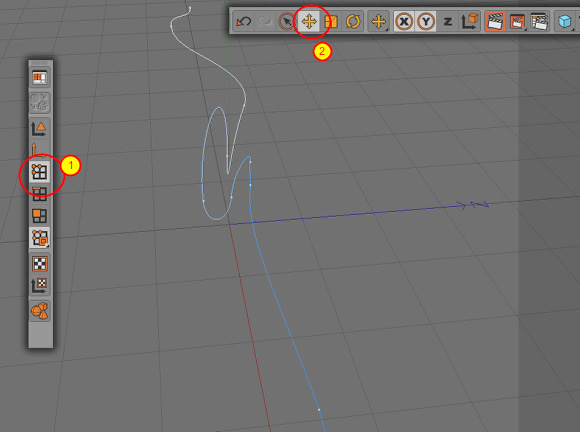
Let's edit the path just to add a bit of depth to it. In Illustrator we have a simple 2D path, now we can move in a 3D enviroment and that will give a nice effect. Select the Point Tool (1) and the just click and with the Move Tool (2), move the points, use the Axis arrows to make sure you are moving to the right direction and axis.
Step 4
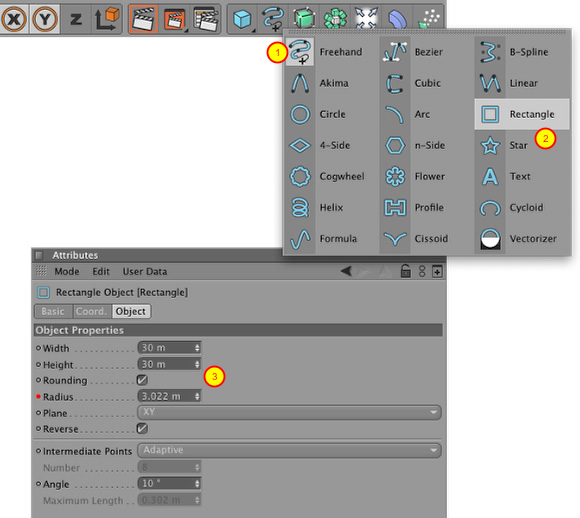
After you finish editing the path, add a rectangle. To do that click on the Draw a Freehand Spline icon (1) and select Rectangle (2). In the Attributes panel change the width and height to 30m, select Rounding and use 3m for it (3).
Step 5
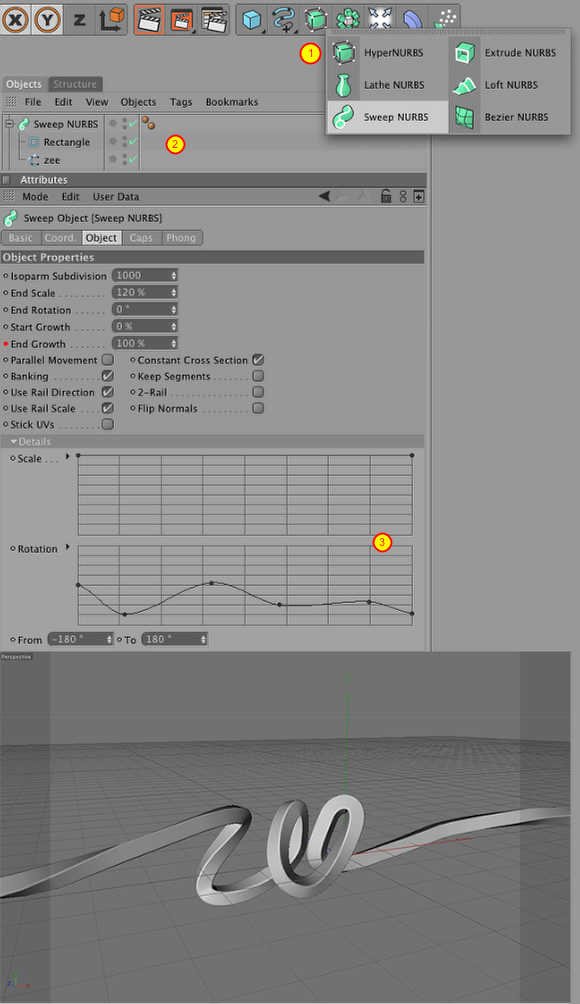
Even though it might look a complicated, this step is quite simple. Click on the Add HyperNURBS Object icon and select Sweep NURBS (1). In the Objects panel you will have the 3 object layers, the Zee path, the rectangle and the Sweep NURBS. Move the path and the rectangle into the Sweep NURBS objects (2). Then in the Attributes panel use the image below for reference (3), but make sure that you change the Rotation.
Step 6
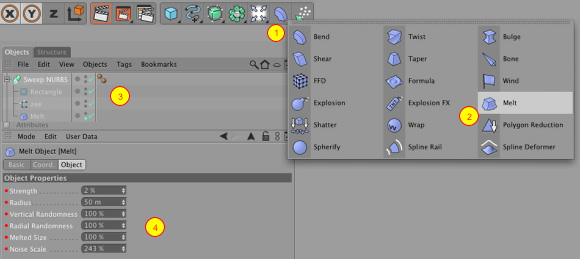
Now let's add a melting effect. Click on the Add Bend Object (1) and then select Melt (2). Again, drag the melt layer into the Sweep NURBS layer, (3) it wil be right below the Zee path. With the Melt Object selected go to its Attributes panel and play with some values. There isn't any fixed value, they will depend on the size of your text path. You can use the ones I used from the image below (4).
Step 7
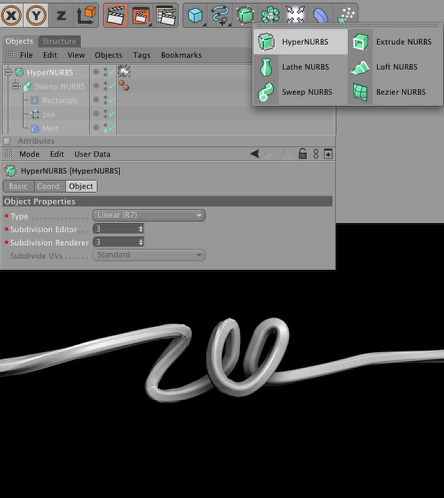
The object is getting quite nice, but there's still some adjustments to be done. Let's make it a little smoother and then add a nice water texture. So click on the Add HyperNURBS Object icon and select HyperNURBS (1). In the Objects panel click and drag the Sweep NURBS group of layers into the new HyperNURBS layer (2). In the Attributes panel for the HyperNURBS object change the Subdivisions to 3 and use Linear (R7) for the Type. Render the Perspective View to see how it's looking. Tip: Change the angle and distance of the view by dragging the icons on the top right hand corner of the preview window.
Step 8
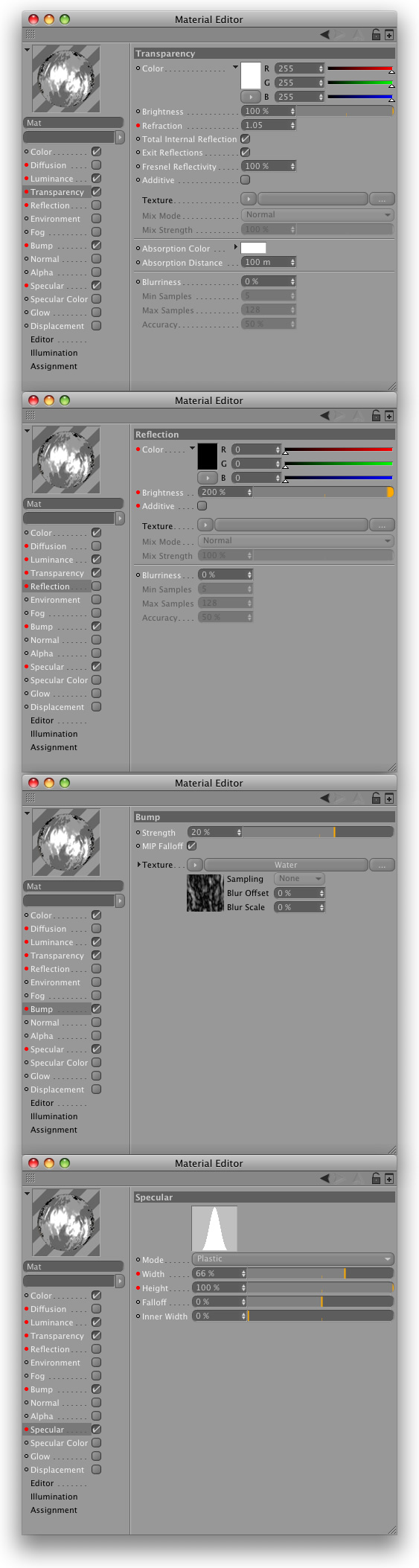
The material we will use to create the water is very important. In the Material Panel go to File>New Material. Then double click on the material icon to open in a new window. Select the Color, Luminance, Transparency, Bump and Specular. Use the image below for values and settings references. TIP: for the BUMP click on the arrow button next to Texture, click on it and select Surfaces>Water. That will use a water map for the Bump.
Step 9
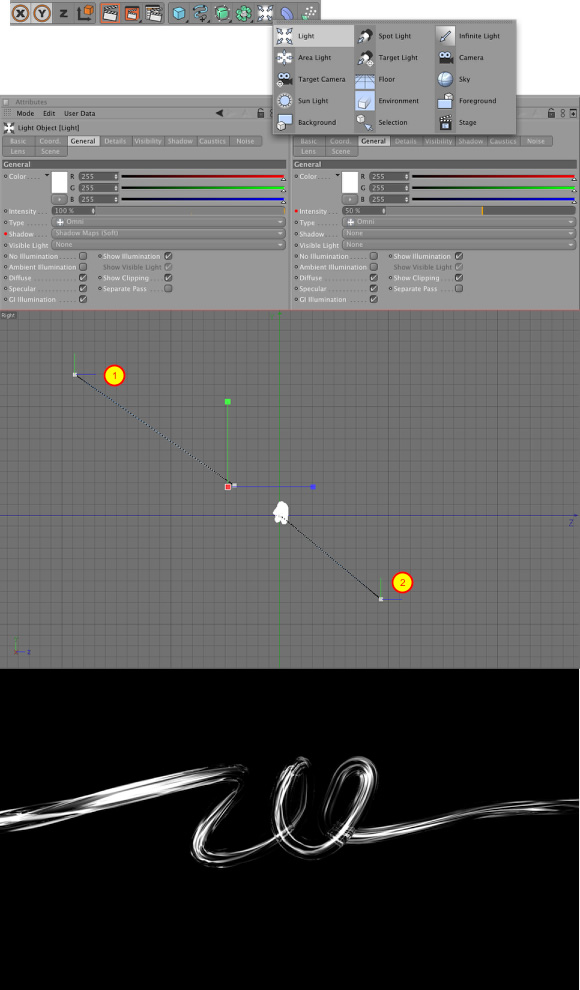
Click on the Add Light icon and add 2 new lights. Both will be Omni but make one 100% intensity and the other 50%. For the Shadow select Shadow Maps (soft). Then move the 100% intensity light to the top of the object (1) while the other light move to the bottom and behind the object(2). Render the Perspective view to see how it's looking. It's supposed to be alright and ready to be exported.
Step 10
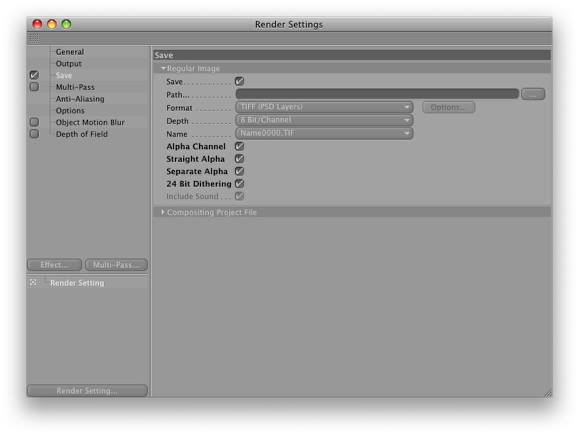
Go to Render>Render Settings and select the Save option. Select Alpha Channel, Straight Alpha, and Separate Alpha. For the Output select Scree>1920x1200 pixels. Then just go to Render>Render to Picture Viewer. After that save it and let's go to Photoshop.
Step 11
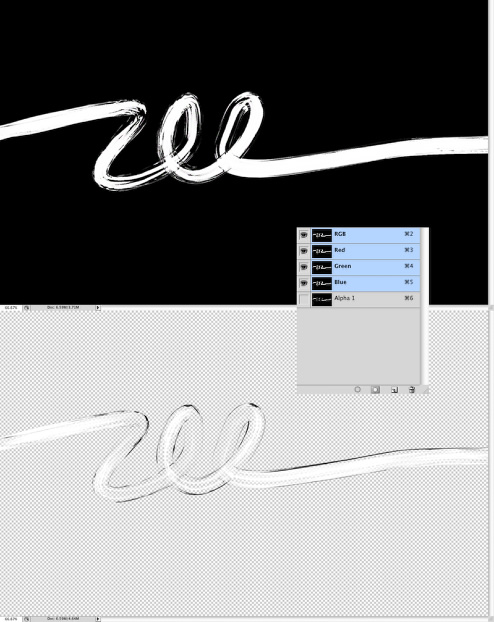
Open Adobe Photoshop and the image rendered in Cinema 4D. The first thing to do is to go the Channel palette and then holding Command(MAC)/Control(PC) click on the thumbnail of the Alpha 1 to load the channel as selection. After that go back to the Layer Palette and select the layer and go to Layer>Layer Mask>Reveal Selection.
Step 12
With a very soft rounded brush and black for the color, paint over the mask to hide more parts of the image, use the image below for reference. We will place now some real water photos to give a very realistic feeling to the image.
Step 13
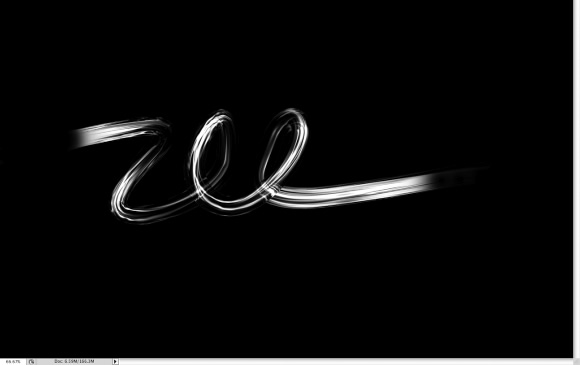
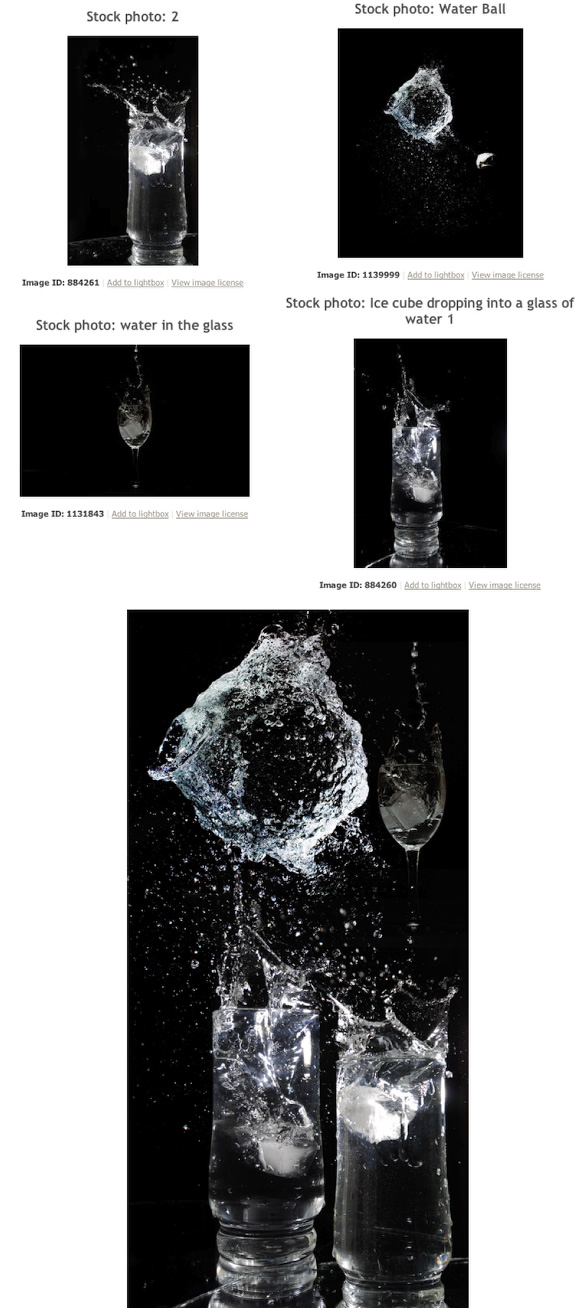
Over at http://sxc.hu search for water splash and download the photos of water with black background, below I showed the ones I used. Place them in your design and always use Screen for the Blend Mode, that way the black will be transparent.
Step 14
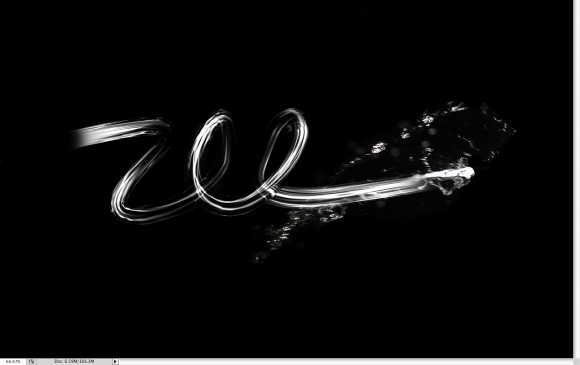
Start copying some parts of a photo and place them in the areas of the image we had hidden.
Step 15
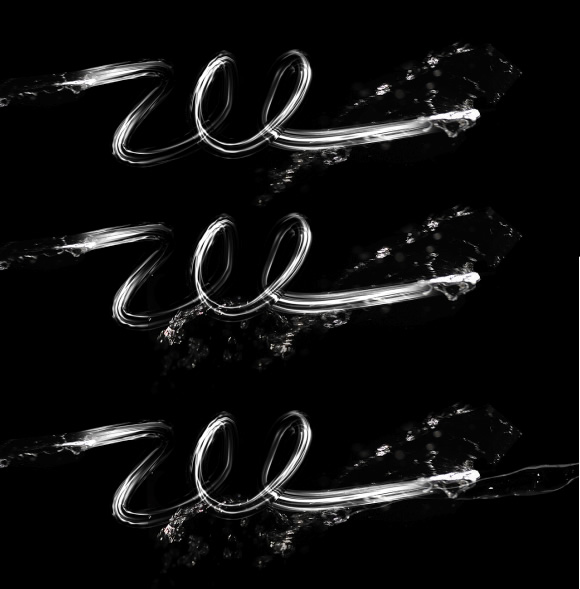
Keep adding the small splash. You can go to Edit>Transform>Warp to change some forms, also with the Eraser Too (E) delete some areas of the splash to make it look real. It's all about details.
Step 16
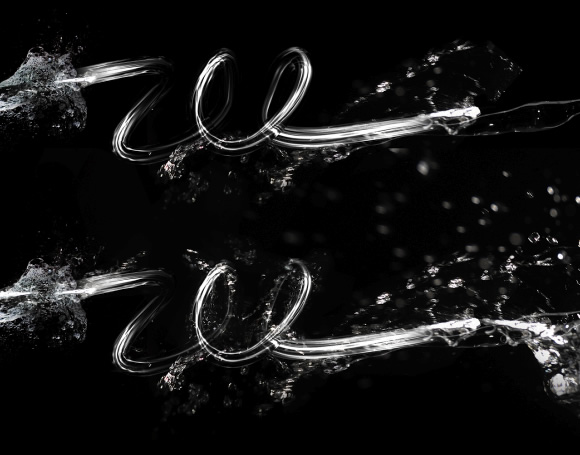
Now add the big splash, for me it's easier that way because it's easier to avoid overload the image with elements. Again make sure you use Screen for the Blend Mode.
Step 17
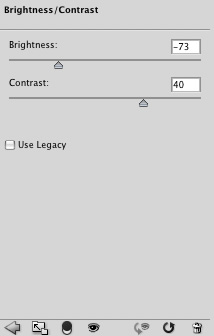
Select all layers and group them. Duplicate the group and go to Layer>Merge Group. Then go to Filter>Blur>Gaussian Blur. Use 20 pixels for the Radius. After that change the Blend Mode of the layer to Screen as well. The blur with the blend mode will add a nice glow effect, however it's going to be necessary to reduce a bit of the brightness and increase the contrast. Go to Layer> New Adjustment Layer>Brightness and Contrast. Use -75 for the Brightness and 40 for the Contrast.
Conclusion
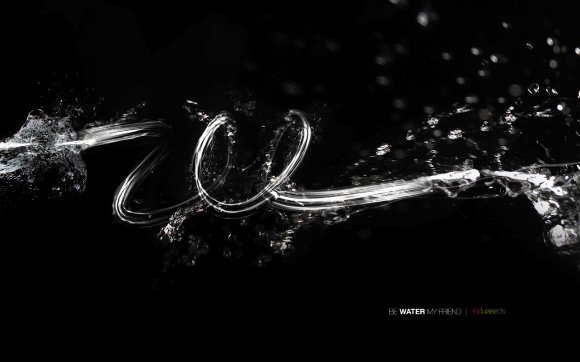
Just add you logo or any text and that's it, we're done. Because of the beautiful outcome,you make think it's a very complicated effect, but the process is quite simple. Probably there are ways to do the text using only the blend tool in Illustrator and not use Cinema 4D but it's always good to know how to use 3D tools. As I said, the process is all about matching photos with a 3D object. I hope it can help you because it helped me a lot in my endeavour to learn more about 3D.
Version 2
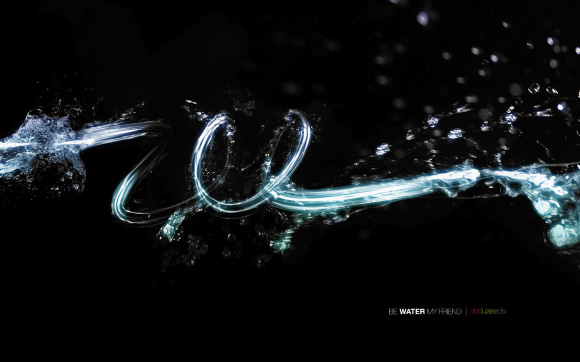
To add some color to the image just add a Gradient Overlay via Layer Styles to the layer we applied the Gaussian Blur in the Step 17. Use Multiply for the Blend Mode of the Gradient Overlay then.




66 Comments
Niiiiiiice!
TOTAL. AWESOMENESS!! Ima learn some c4d now.... brb!
Now that's cool.
Thanks for the tut!
thanks for the tut
You've really OUTDONE yourself this time... WOW!
thanx a lot , great tutorial
Great! realistic as hell
That's awesome! But I'd like it better if you used one of the free 3D programs available online..
Genious! Thanks for this tutorial!
amazing ... imagine the possibilities that you can do with this.
Thanks
Great!!!!
nice!! more cinema4D tutorials please!! ;)
pretty pretty cool
The end result is fantastic. Awesome tutorial
cool stuff, thanks
That's amazing! Awesome!
yeahh this one is great!
really nice!
i have to search why many people use Cinema 4D instead 3ds Studio or Rhino 3D with vRay renderer
The big goal of this tut is that you use of 3 differents tools, making them the workflow to finish the artwork
adeux
from Argentina
if put inside a cup the water becomes the cup, if put inside a pot the water becomes the pot,
"quote me homie"
ventik0n
i am chinese i like you works verymuch
Thanks for sharing this amazing tutorial.
Just hope the style doesn't get rinsed by everyone and designers use the methods learned to give it their own twist to it.
simply amazing! Thanks for sharing! ;)
Nicely done :) I swa you result on Flikr yesturday (I think) and I've been really impressed!
Good job
I'm just getting into graphics design, and you all have done it again; beyond having a huge influence on my Photoshop learning curve, this article is 100% why I'm breaking down my unreasonable fear of C4D and diving in. All of you at Abduzeedo are truly my Mr. Miyagi, Yoda, and Mr. Hand in one website. Thanks!
hey awesome tutorial, but i was wondering if theres anyway to do a simmilar effect with photoshop, like the part where u used illustrator
I wonder why it's so realistic, maybe the WATER stock?
That looks so sick.
i can't import the illustrator file in Cinema 4D - "Unknown file format". Help pls
Simply awesome... you just gave me an inspiration... will be practicing soon... thanks
Hay :: kckfm ::
From illustrator save it as version 8 (illustrator file) then import / merge in C4D... it will work
Hi,
Awesome! Simply awesome!! Just one thing.. I can't get the water thing so smooth as you did, help?..
I use 3dsmax and I know very little about c4d
The one million dollar question is: is cd4, 3dsmax or what is the best??
awsome tutorial! check out my version http://geler.deviantart.com/art/watersplash-120104137
hey that's a very inspiring for me! that helped me a lot in my studies! thanks!
Whoah, this is way cool
No body uses maya for this stuff???
wow!
Hey Fabio how u get those type of knowledge....
I need a tutorial about that! ;)
Me encanta
i can't import the illustrator file in Cinema 4D - "Unknown file format". Help pls =(
Woow it's awesome! Great tutorial, very useful
I was So looking forward to this one!
Great tutorial man.
Specifically I really appreciated the step by step approach to Cinema 4D.
This was the first time I used it and it was a great level of help, without making it a monotonous newbie mess.
Thanks.
First off, thank you very much for the comments, now let me answer some questions.
I believe the 3D apps are quite similar in terms of features and what I did in this tutorial is very simple, so, I believe it's possible to do the same in all apps. I use Cinema because 3D max is not available for mac.
As I said the idea behind the tut was to play with different apps to create a nice result... I believe that if you have a clear idea and goal for an image in your mind the learning process is less steep.
thanks again
Mine woudlnt open in c4d, but followed some advice further up, works fine.
save it as illustrator 8 file.
http://sjha-ha.deviantart.com/art/Water-120339065
My attempt, tell me what you think.
first time using C4D, great tut, thanks alot.
Featured here: http://www.presidiacreative.com/web-picks-19/
yep nice work mate ;- not many make me want to give it a go TuT style... but your guide meant I had to try it
here is the result
http://7ohn.wordpress.com/2009/04/28/photoshoping/
hi, Weldon & good job...
i have problem with render.
after rendering if i open the pic file in ps (cs3) in channel i do not have a alpha channel but i checked in render setting and sign the check box of Separate Alpha.
i do not why...:-(
plz help me...
Great Post, thanks
http://twitter.com/YODspica
Hey abduzeedo.
Trying to do your tutorial, but all the images linked to the steps are no longer there so i am stuck at step five. I was wondering if you could repost them or be able to help me out.
Cheers. south1000@hotmal.com if you need to email me...
Amazzzing, thnks :)
very nice, I learned some new things. Thanks for sharing!
Amazing job! I love reading all the tuts on this site. Always an impressive display. Will definitely try this one out! Thanks for all the outstanding work you put into this.
This is really kewl.... end result is very very realistic.... I'm totally new to cinema4D Plz More Tuts based on C4d :) U r My H3R0
The reason Cinema 4D is used is simply because it's easier to use. It's also because it's more available for Mac users. 3DS Max uses DirectX for it's viewport rendering, which is unsupported by Macs, making it unavailable for them. As for the question of if one is better or not, that all depends on the designer, there have been amazing pieces made by C4D, but 3DS Max has more capability in their standalone rendering engine. Plus, vRay is much cheaper for 3DSM, and is $1000 for the version for C4D. I hope this helps other people understand.
Hey Abuzeedo.
Great tutorial, but I got a stupid problem.
The step FILE>MERGE...the Illustrator image does not open...Do you have any idea why this is happening?
Thank you very very much!
Olá Fábio...eu de novo...
Sou brasileiro também, mas vivo em Portugal há 3 anos, onde estudo Design Têxtil...
Cinema 4D é novidade pra mim, não tenho nenhuma experiência com Illustrator/Photoshop etc, mas tô tenho aulas no curso. Entretanto, ao tentar seguir esse tutorial, esbarrei na etapa FILE/MERGE...simplesmente o C4D não importa o arquivo do Illustrator...e claro que não sei o por quê. Se puderes me mandar um mail, agradecia...
Fica o meu MSN, caso queira adicionar: strapazzolli@hotmail.com
Obrigadão!
Célio
Great tut ! Tnx ! :P
Great, new idea and creative.. Nice job.
The only thing I can say is wooooooooooow I'm from Mexico and I think this tutorial is awesome. I´ll try to do see you amigo
I download c4d because I read this tut tks very much !!!!
Thanks for the knowledge...
here's my version:
http://i98.photobucket.com/albums/l268/justizzzle/Waterworks2.png
Great tuts
Great tutorial. I couldn't quite get the nice soft texture you had in C4D following your instructions. So I modified it quite a bit using some of my own techniques.
But this was a fun tutorial to do. Working with water is always fun work. You can see my design on my website at www.knrdesigns.com I'll upload it in a few.
Keep up the good work.
if you still can't figure out how to export the AI file in CS3 you should do the following:
when you're done with the object creation click File > Save and save as Adobe Illustrator Document (Ai) then in the other pop-up window choos version 8 of the Illutsrator; save and import to Cinema!
Nice Tuto!!!! Thanksssss!!!! :P
It is just beautiful
Thanks for such a wonderful lesson.
I will try and recreate it for Text and see how it goes :)
Thanks again and again !!!!!!
Post new comment