by jeff
Rive design merges animation, code, and state machines in one editor. Spotify Wrapped and LinkedIn both used it to reach over 500 million people in 2025.
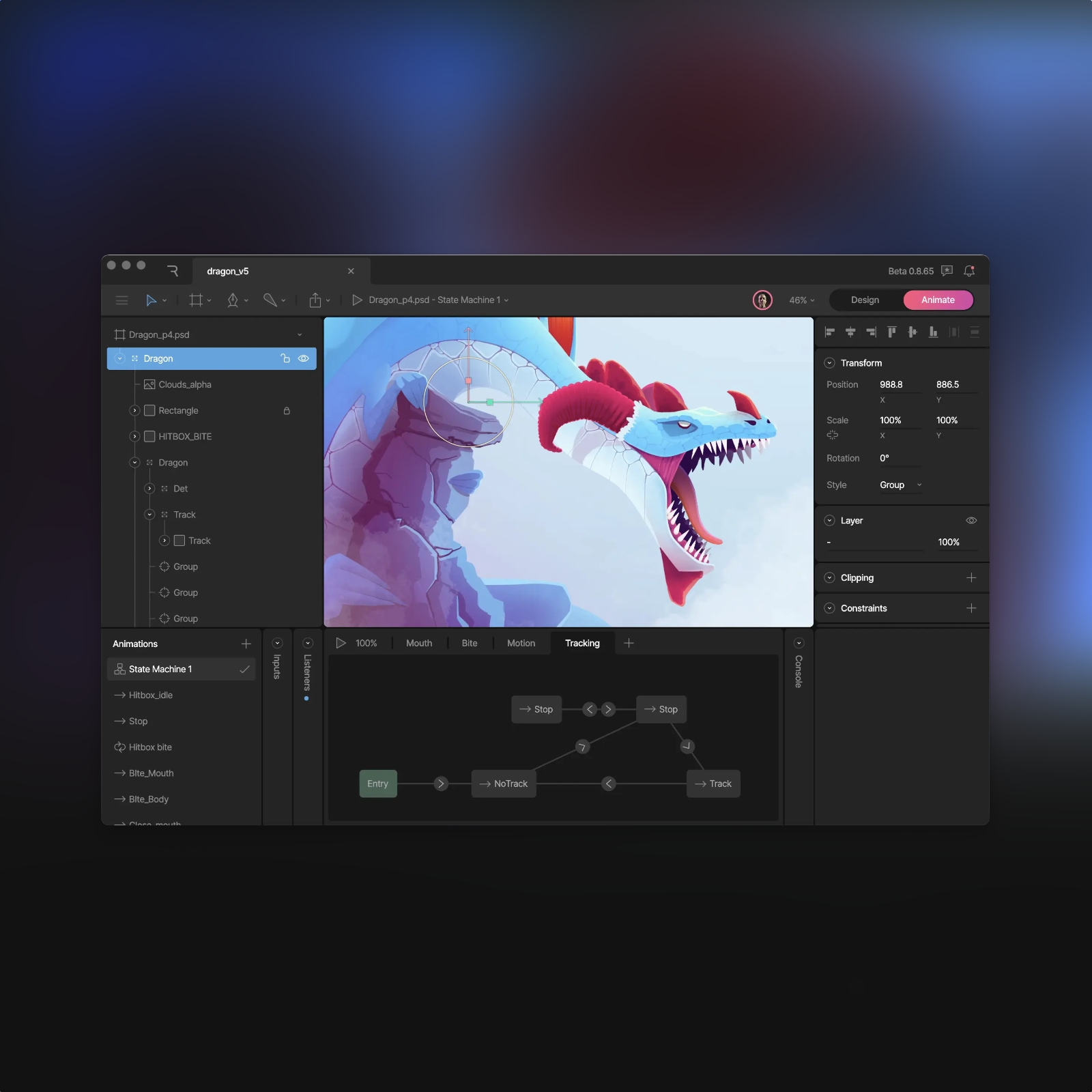
Rive had been building quietly for years. The tool was founded by engineers who literally wrote their names into the Adobe Animate credits, people who spent decades inside Flash and wanted to rebuild what made it great without inheriting what made it fragile. The result is a browser-based editor where a Rive design file carries animation, state machines, data binding, and code in a single exportable package that runs inside native runtimes on every major platform simultaneously.
Rive Design Powers Experiences at Billion-User Scale
Spotify chose Rive design for Wrapped 2025. Over 300 million users engaged with the experience, sharing it more than 630 million times across social media. Rive design files handled data variation, localization, and real-time personalization without any pre-rendered video.
LinkedIn's first-ever Year in Review used the same workflow, generating 207,360 possible user journeys across three languages on low-end Android devices. Pre-rendering that many video variations would have been impossible. Rive design handled it natively.
What Makes Rive Design Different
Rive design operates on a concept that sounds obvious once you hear it: the file you design in is the file that ships. No export to video. No handoff to After Effects. No Lottie file that breaks on Android. Designers and developers work in the same file, and the open-source runtimes package directly into the app. File sizes run up to 90 percent smaller than equivalent Lottie exports.
The State Machine handles interactive logic: the branching, conditional, user-driven behavior that distinguishes a living product from a looping video. Scripting uses Luau, the language developed at Roblox, running directly inside the editor. The AI Coding Agent lets non-developers describe what they want in plain language and generate working scripts through iteration. It is the closest any design tool has come to collapsing the designer-developer divide since Flash did it in 1996.
The End of the Flash Vacuum
Adobe Animate's maintenance mode confirmed what most designers already sensed. Rive design answers the question Flash originally posed: one environment where interactive content is the actual product. The editor stays free. Paid plans start at nine dollars per month. This is where that creative energy went.
See Rive design in action below. This is a live Rive animation running directly in the browser via the Rive web runtime, no plugin required:
Live Rive animations — running in the browser via the Rive web runtime:
The same Rive design file runs identically inside a native iOS app, Android app, or Unity game with zero changes to the source. That cross-platform consistency is the foundation.