by abduzeedo
Postlife Magazine Issue Two is editorial design from Classmate Studio — Technosocial themes told through procedural type, dark prints, and sharp layouts.
Budapest-based Classmate Studio continues to push the boundaries of independent publishing with this second issue. Founded by a small team of designers with roots in print and visual culture, the studio treats each issue of Postlife as a design object in its own right — every spread, every typographic decision, every material choice is deliberate. The result is a publication that feels both rigorous and expressive, a physical artifact that rewards close reading.
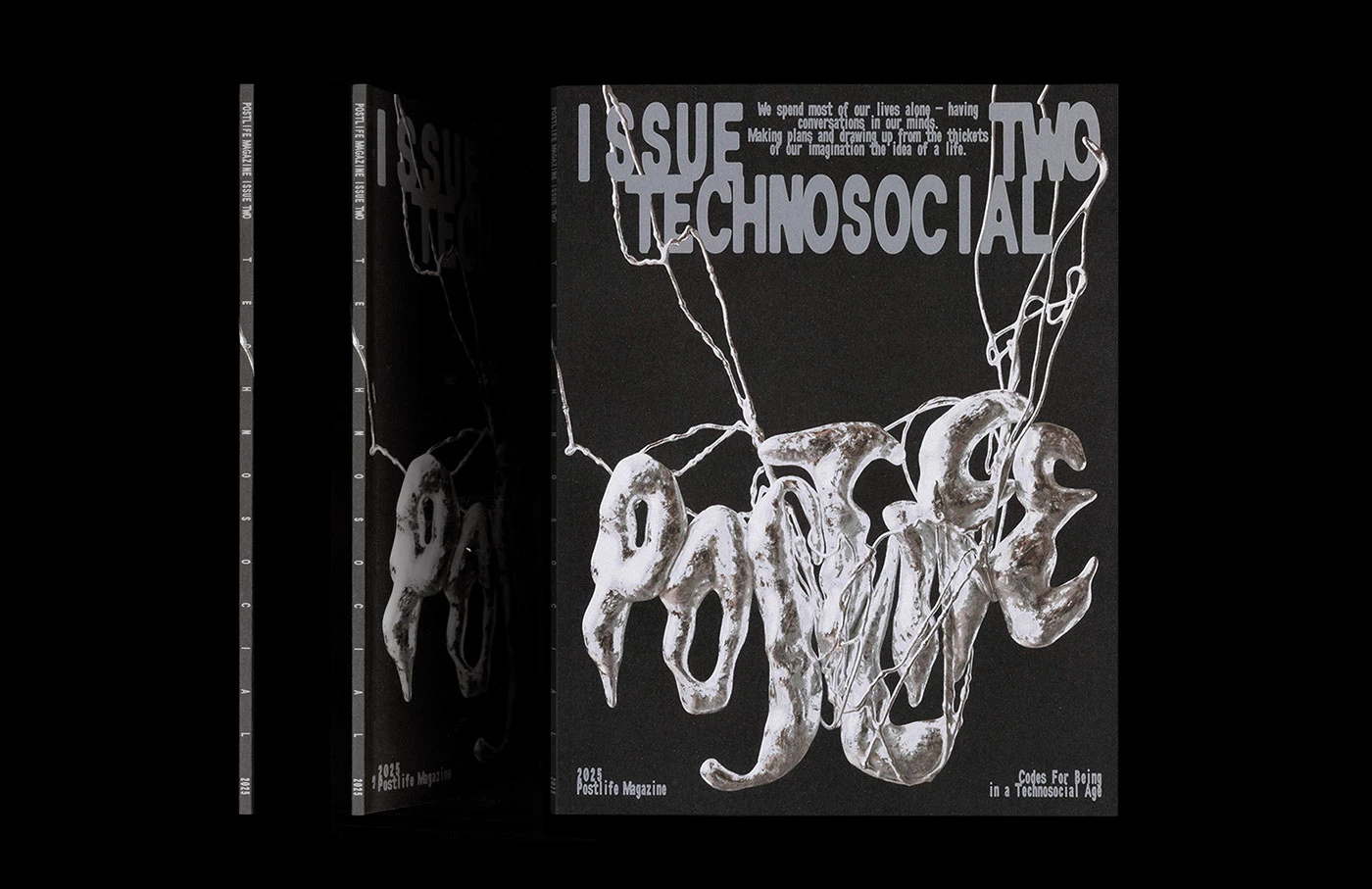
The magazine asks a direct question: what happens when technology and the human condition collide? Not as a thought experiment, but as a lived daily reality. Issue Two — subtitled Technosocial — takes that question seriously. Through essays, storytelling, and illustration, it builds a visual argument on the page.
Editorial Design That Holds Two Things at Once
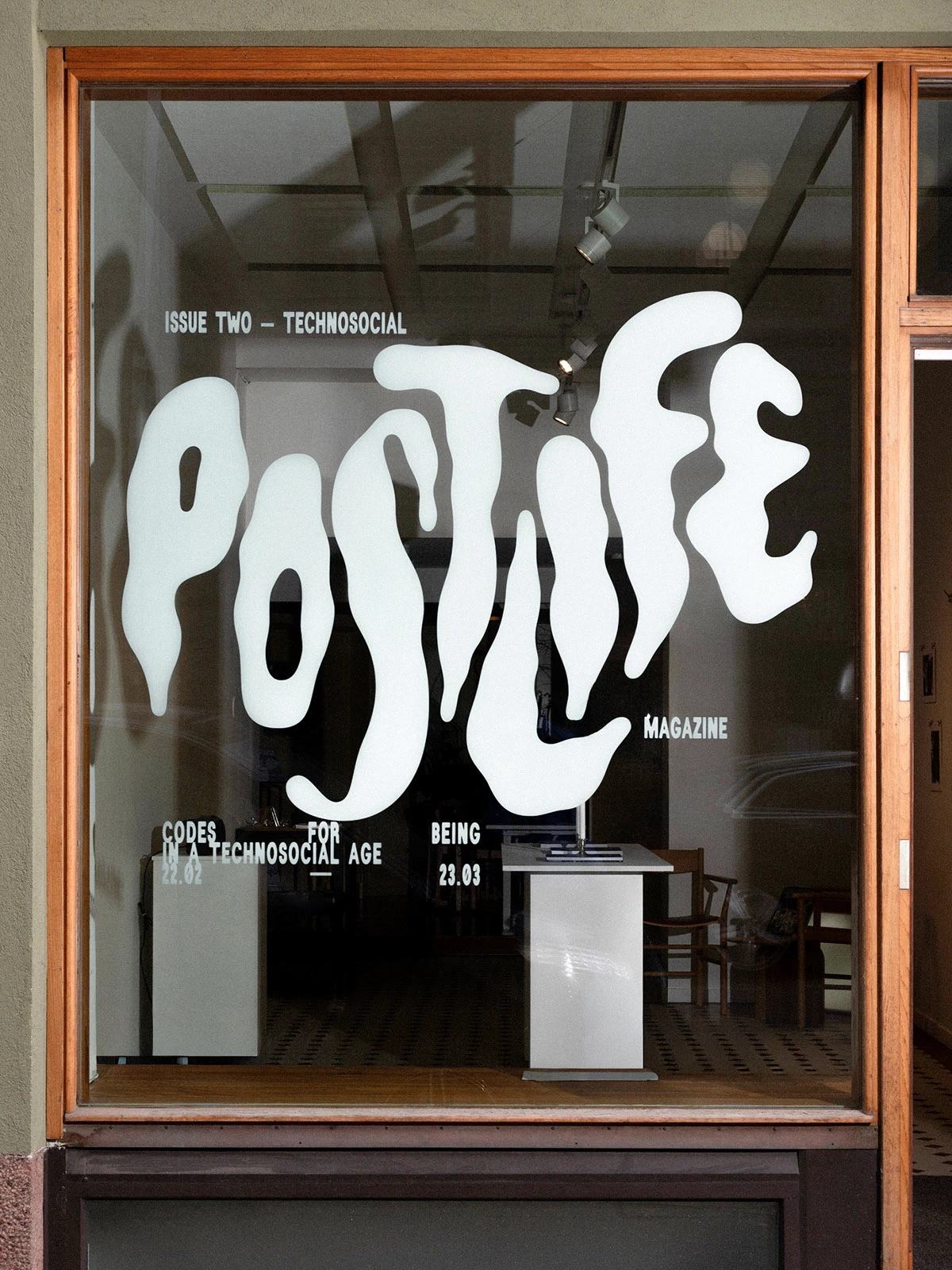
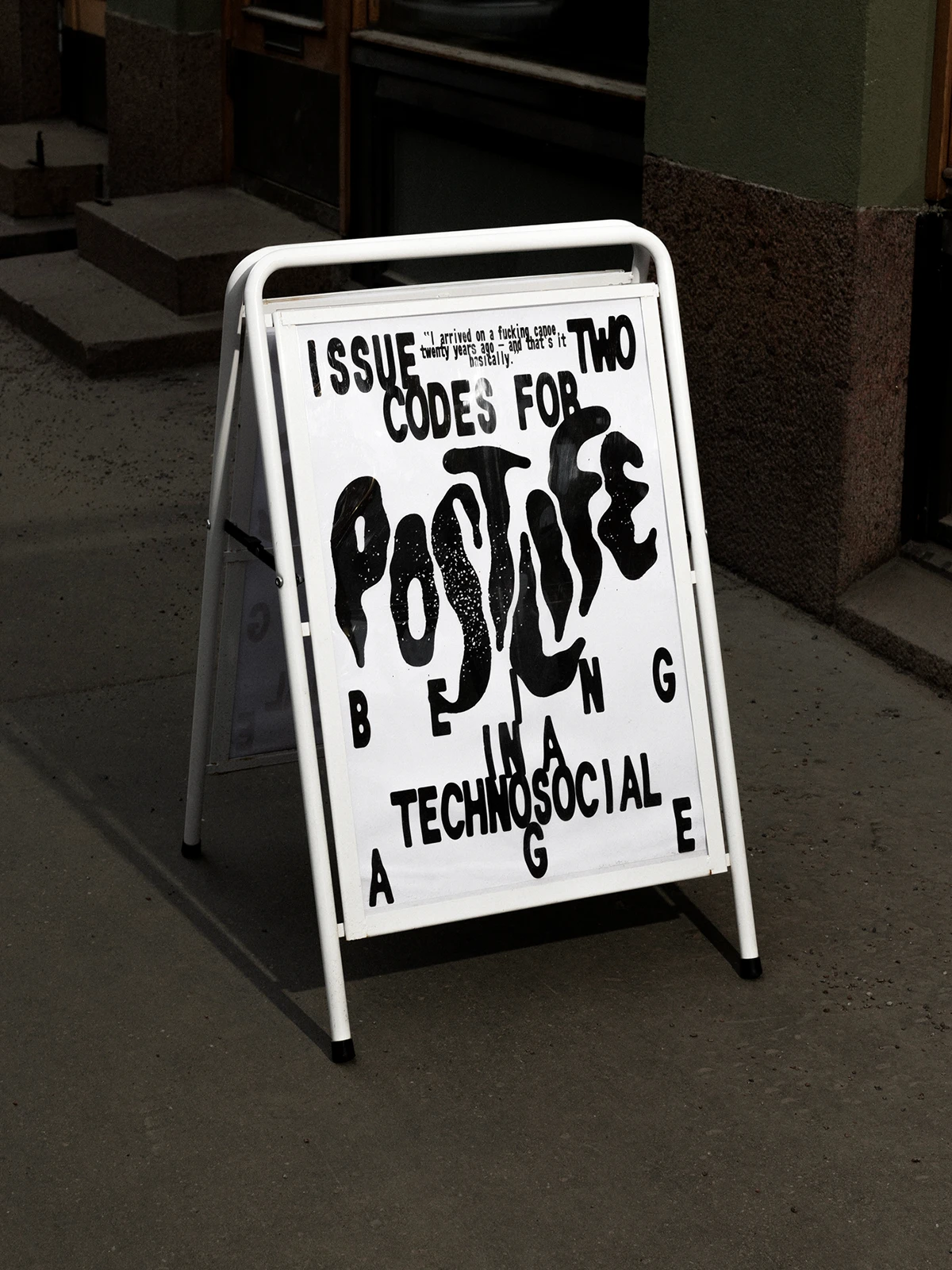
The tension at the center of this editorial design is between structure and mess, between the digital and the organic. Art direction by Alex Yletyinen, Lili Köves, and József Gergely Kiss at Classmate Studio runs on this duality. The cover is all black — no image, no ornamentation. Just procedurally generated letterforms that feel almost biological. The logo shifts and morphs. It is not a stable mark. That instability is the point.
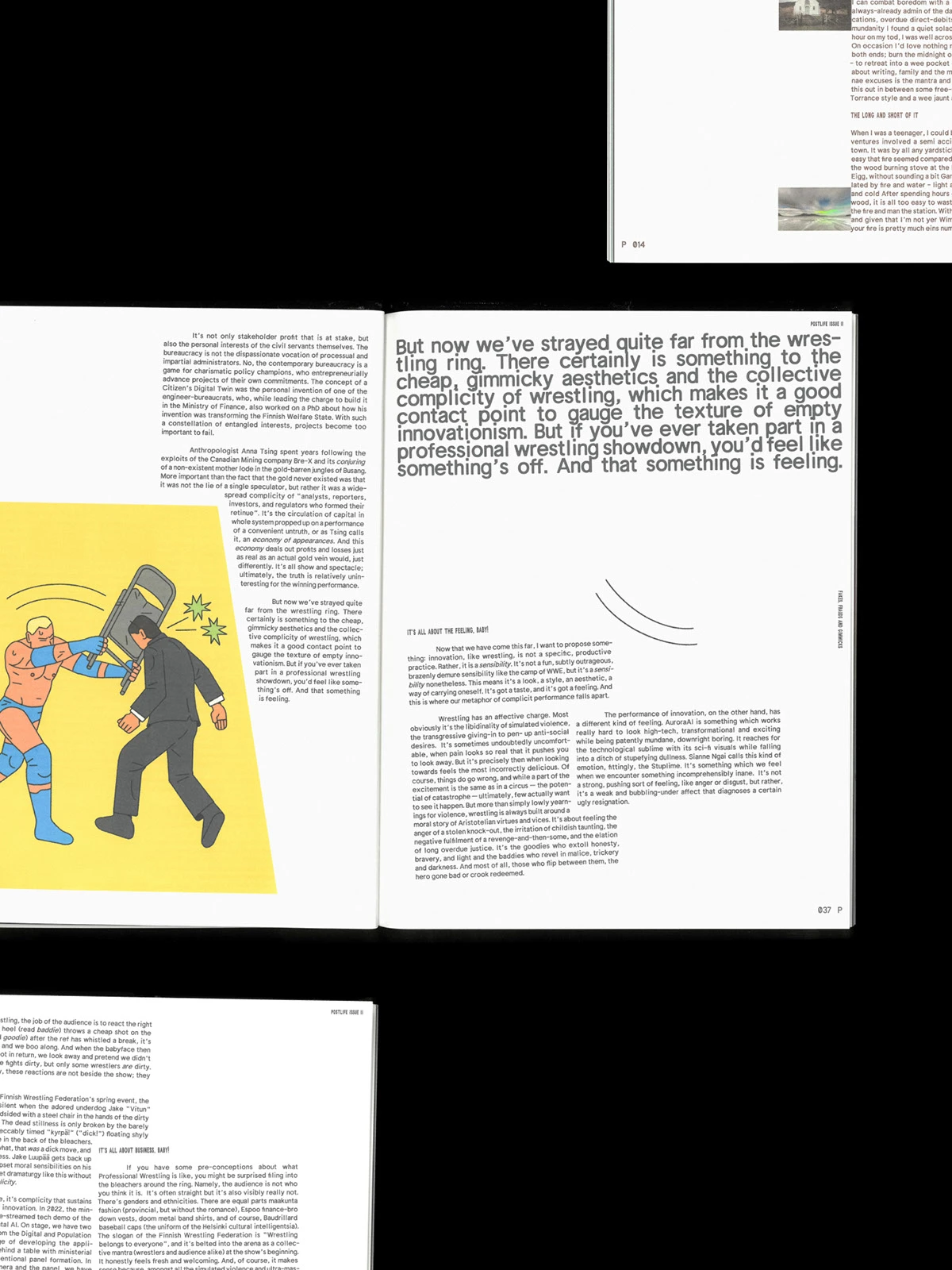
Inside, the spreads shift register constantly. One opening gives you dense justified body copy in a restrained serif, tight margins, the page breathing through white space. The next hits you with oversized display type set at scale — "TECHNOSOCIAL" rendered in dimensional letterforms, like inflated chrome, casting shadows. Then a spread of hand-assembled illustration, loose and warm against the geometric grid. The magazine never lets one mode settle.
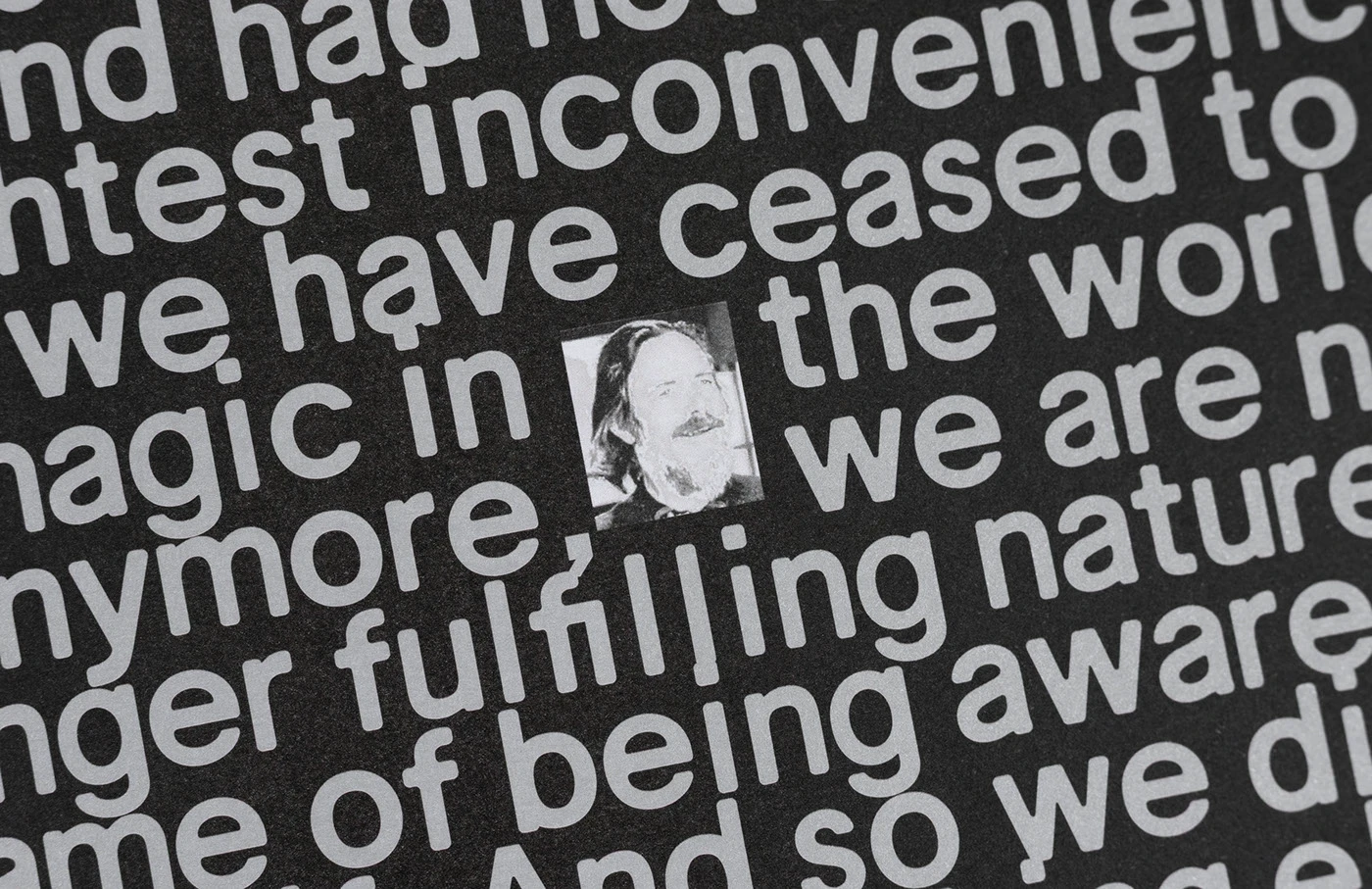
Typography is central to how this editorial design communicates. Machine-inspired letterforms appear alongside warmer, more analogue treatments. Justified text with deliberate loose letter-spacing introduces friction. You feel the pull between order and entropy on every page. The justified columns echo software logic; the loose spacing feels like a signal breaking up.
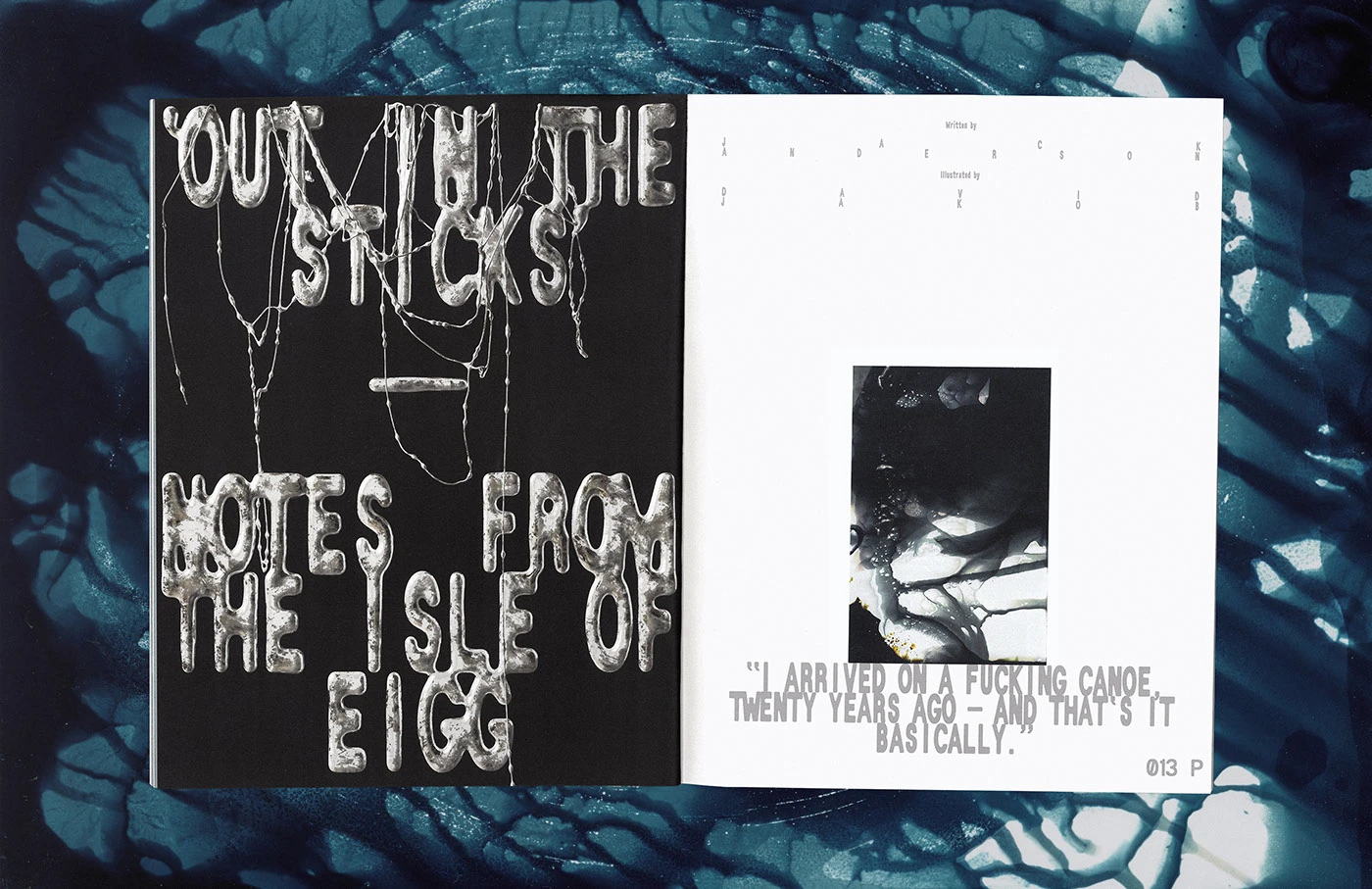
Color is equally controlled. Most of the book runs on a near-monochrome palette — black, charcoal, white, grey. When color does appear, it arrives with force: a yellow spread with a stylized illustration, turquoise tones in a photographic section, a section set on deep black with an organic 3D figure in white. Each departure from the monochrome baseline is deliberate.
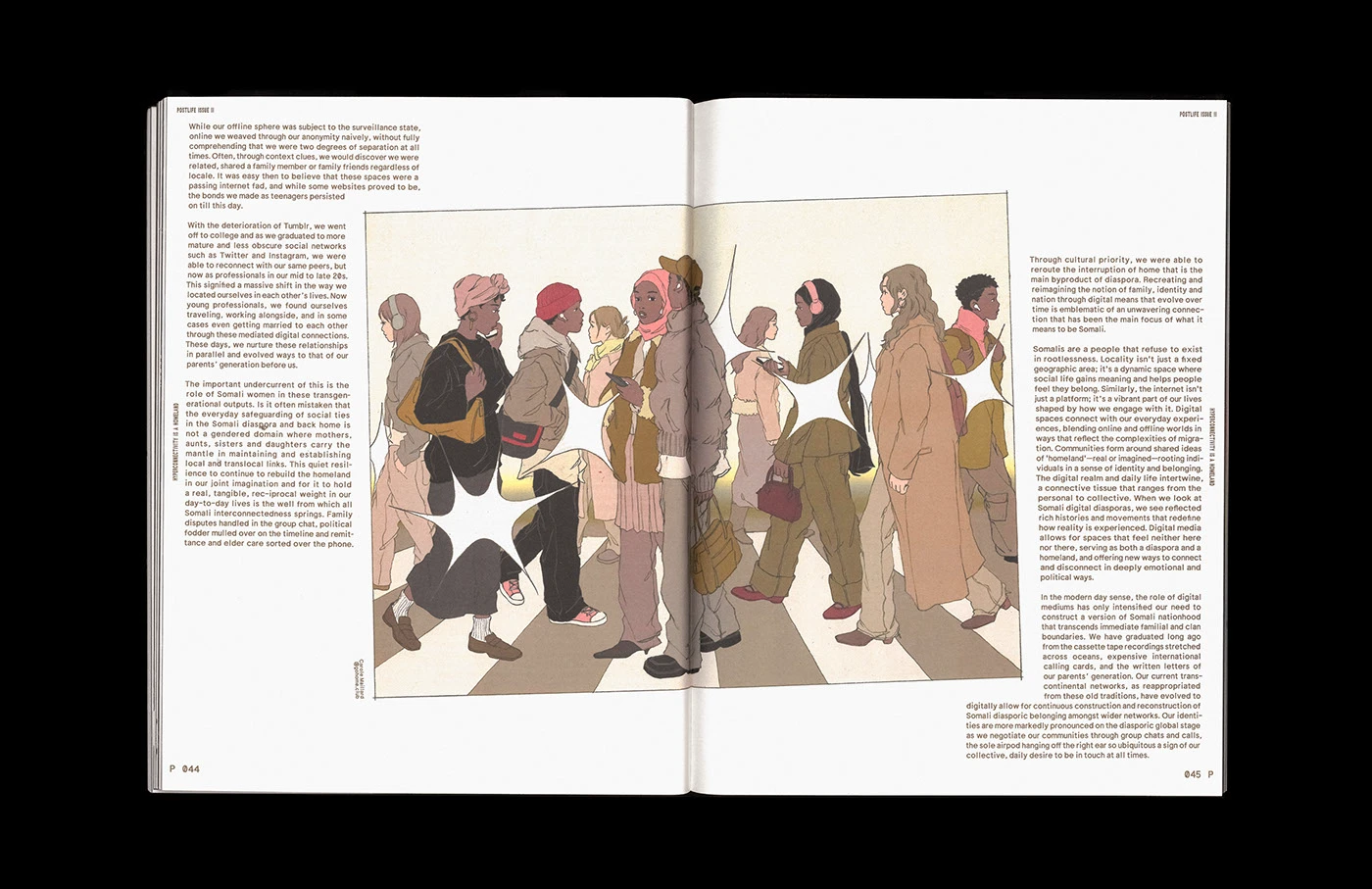
The photography and illustration contributors — Timo Bontembal, Aapo Nikkanen, Jack Anderson, Léo Coquet, Santtu Raisanen, Mariam Osman, and others — bring material that resists clean categorization. Cyanotype-adjacent photography, illustrated reportage, archival-feeling documentary images. The editorial design holds all of it together without flattening the differences between them.
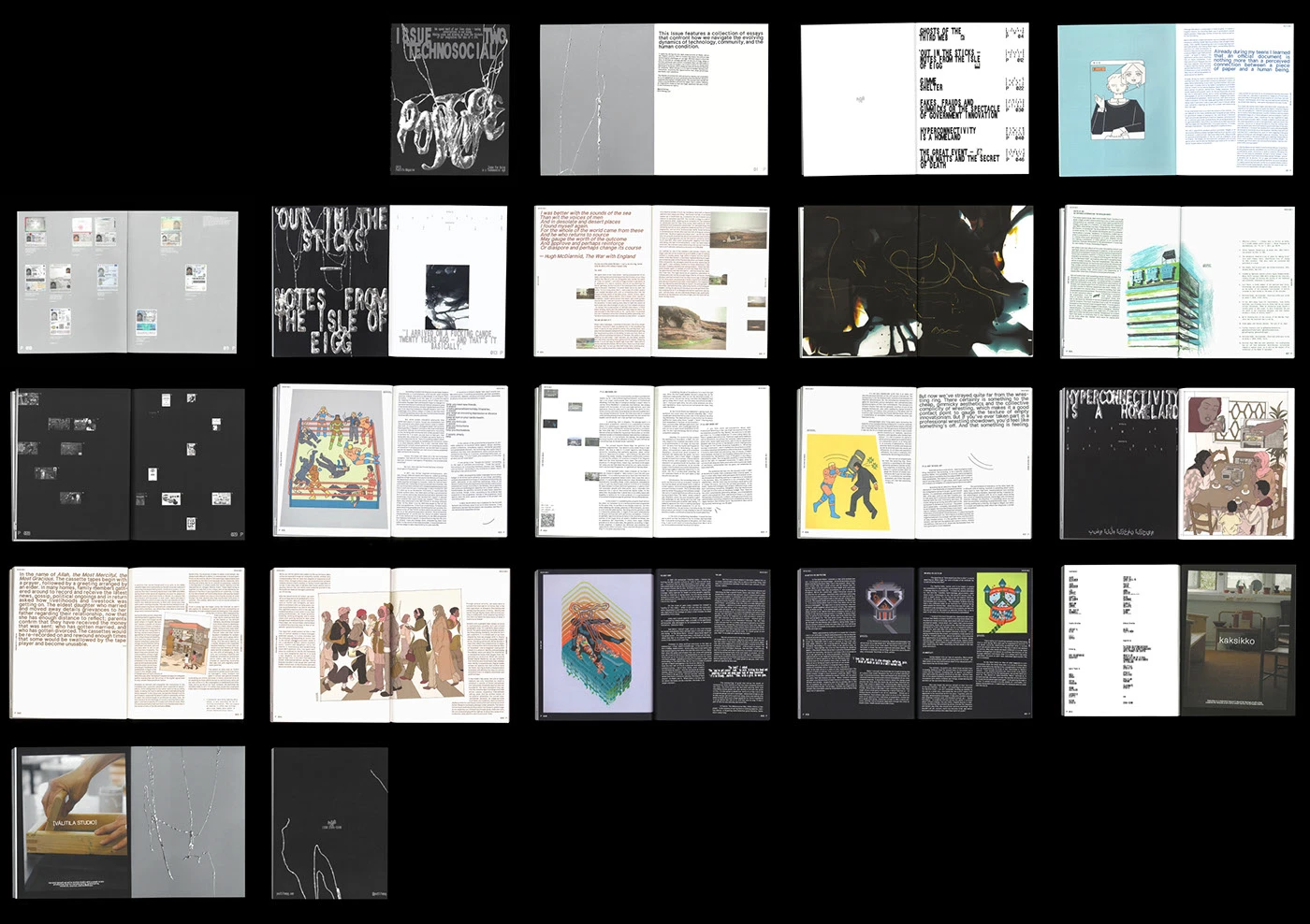
The overview spread of all interior pages in the gallery makes the full system legible. You can see the rhythm: dark section, light section, full-bleed image, text-heavy spread, typographic splash page. The sequencing is deliberate. It reads like a designed argument, not just a curated collection.
Postlife stands as a reflective object — an experiment in how editorial design can capture the instability of the present moment. Issue Two is available via postlifemag.com.