by jeff
Marathon brand identity by Kurppa Hosk spans four years of world-building, faction design, and community systems that made Bungie's game a Steam chart-topper.
When Bungie set out to revive Marathon — the 1994 cult shooter that predated Halo, the studio understood that launching a live-service extraction game in 2026 demanded more than traditional marketing. It required a complete creative ecosystem. That responsibility fell to Stockholm-based agency Kurppa Hosk, which began its collaboration with Bungie in 2021, nearly four years before the March 5 launch date.
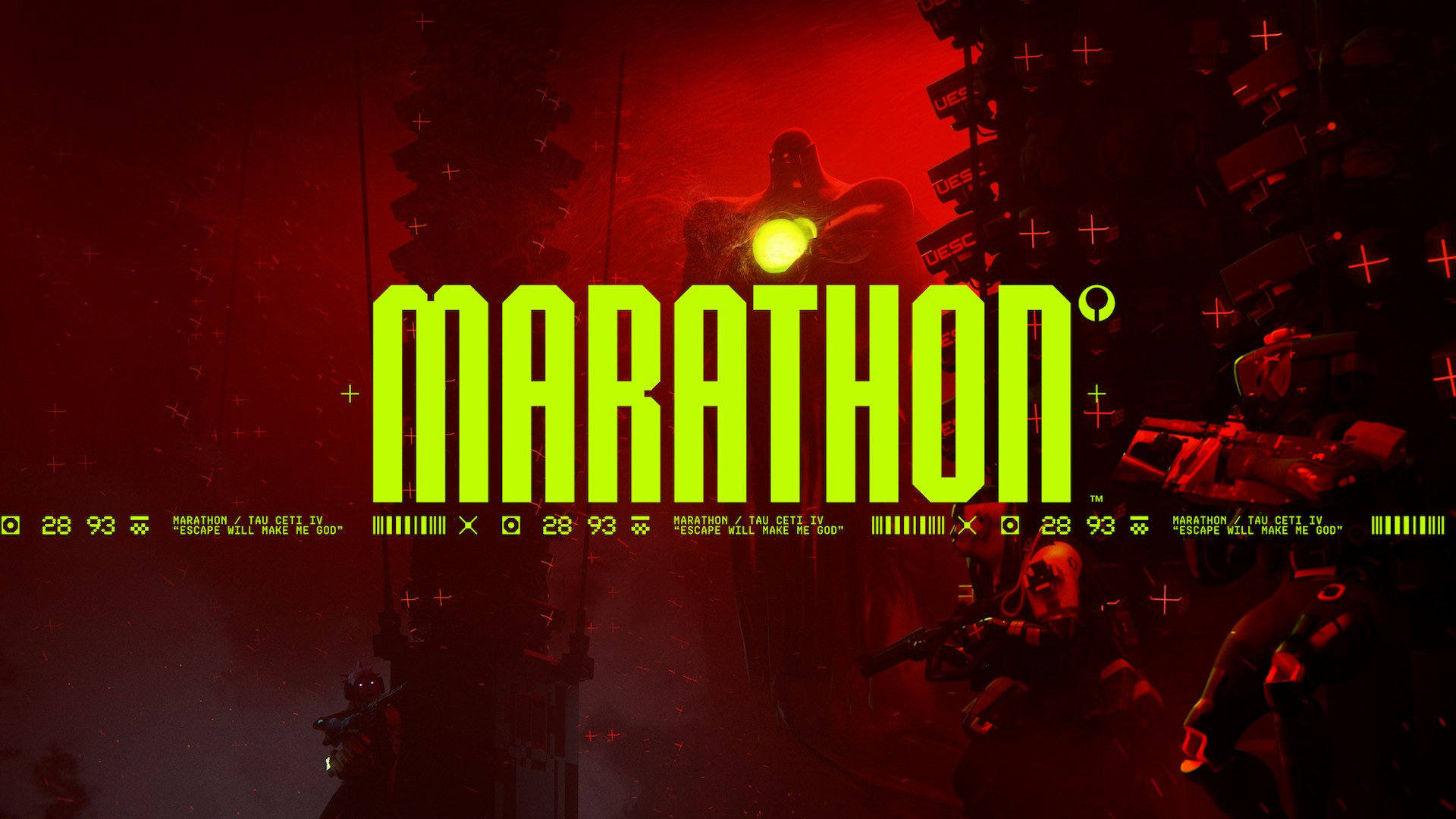
The scope of the Marathon brand identity project was rare by any measure. Kurppa Hosk started at the visual foundation: fidelity graphics, worldbuilding iconography, and faction brand identities for the game's warring factions inhabiting the derelict colony of Tau Ceti IV. Every element had to serve both the in-game fiction and the real-world brand, collapsing the boundary between product and world.
Marathon Brand Identity From World-Building to Launch Campaign
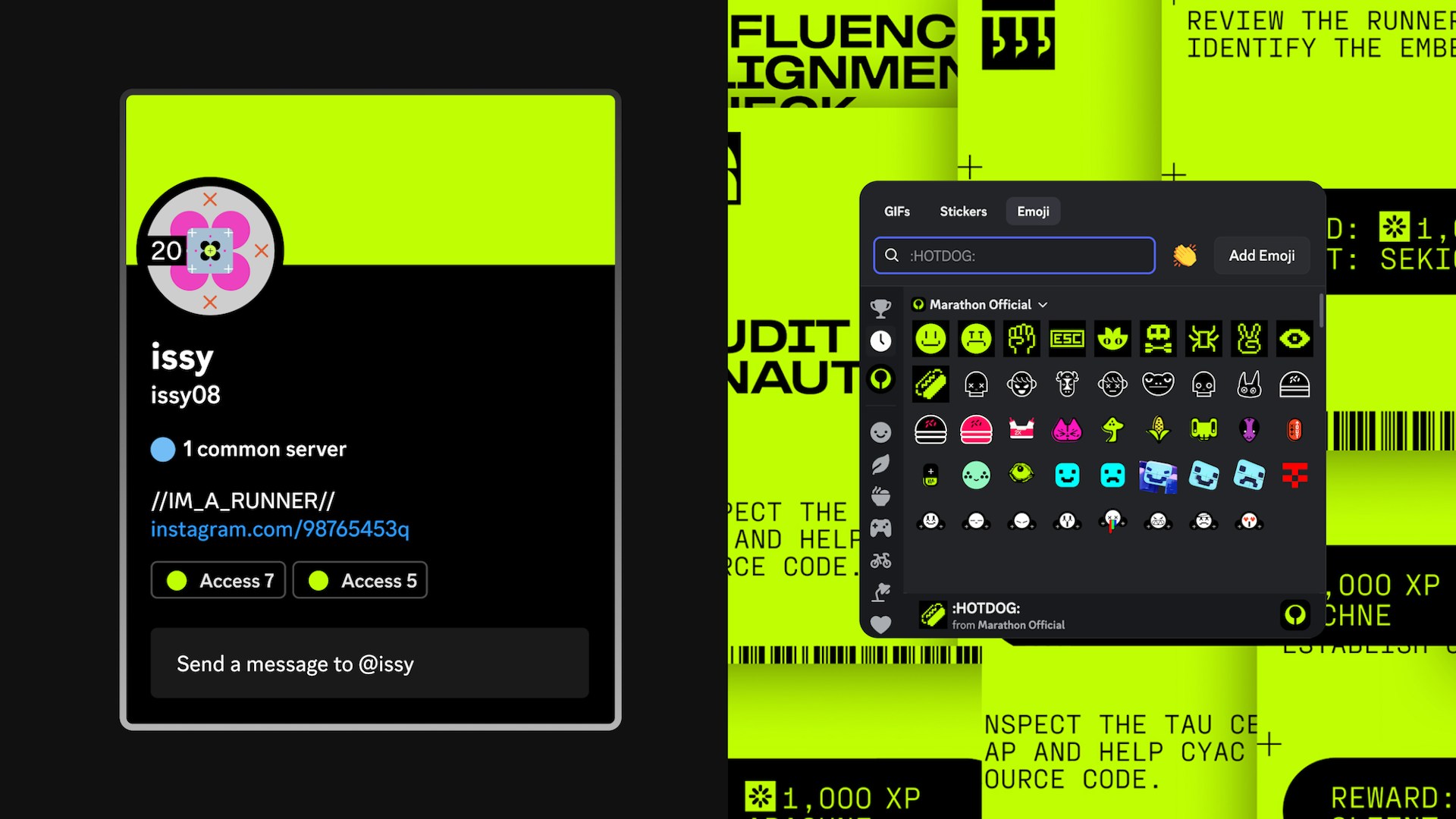
The creative work eventually expanded into a full marketing partnership covering brand strategy, visual identities, social media asset production, paid media strategy, community environment design, and experiential activations. The Marathon brand identity system had to operate simultaneously across a game interface, a merch line, a Discord server with 400,000 members, and real-world pop-up experiences that blurred in-game fiction with physical space.
A multi-day experiential activation built around interconnected puzzles asked participants to physically trace narrative threads from the game into the real world. Kurppa Hosk engineered a Discord server using first-of-its-kind personal identification technology, allowing individual participants to be tracked and rewarded in real time for their puzzle progress. The result was the largest Discord server ever built for an unreleased game.
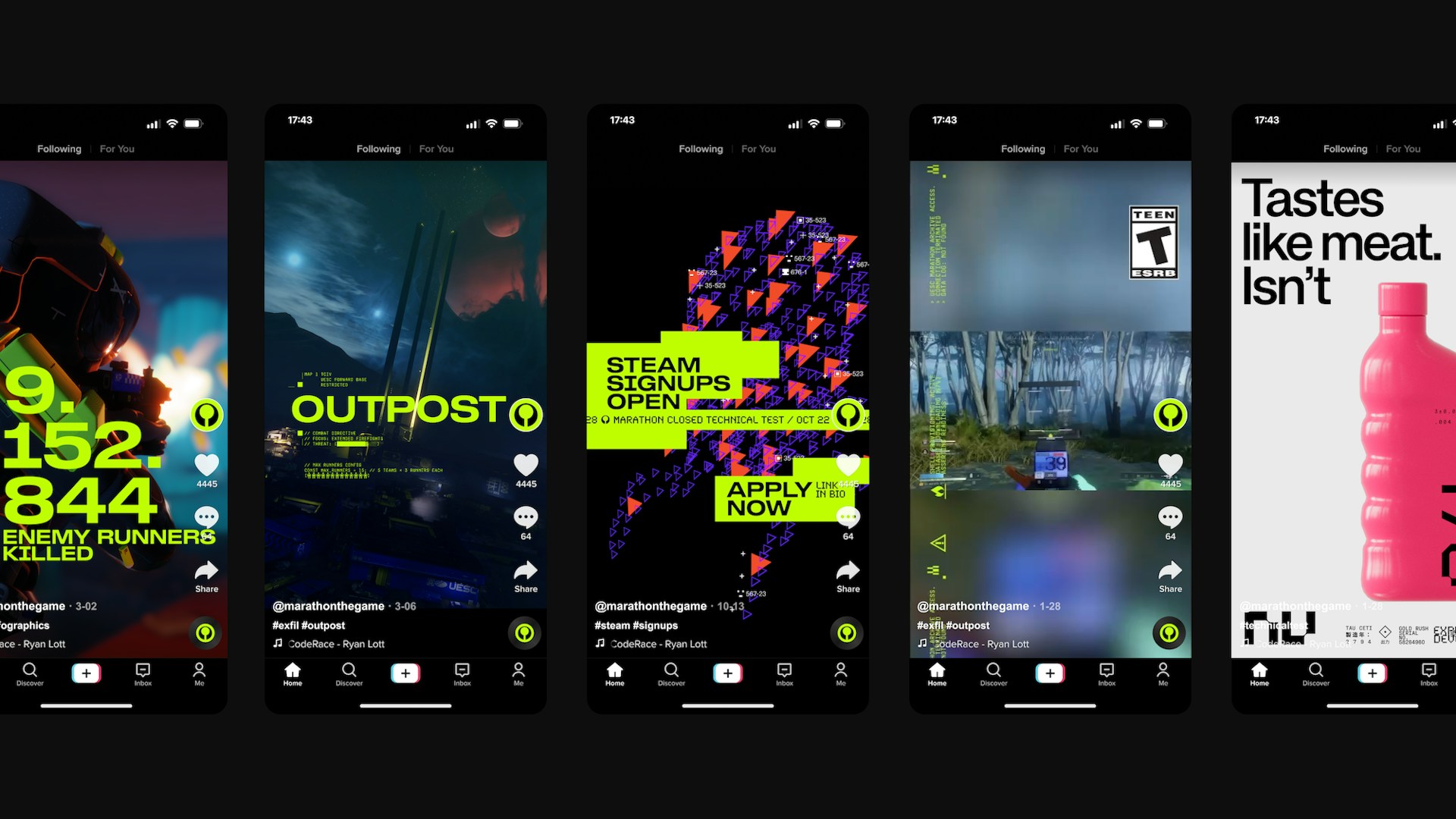
Creative director Leo Drakenberg described the approach as requiring "cultural fluency, speed and the ability to orchestrate product, brand and community as one living ecosystem." The Marathon brand identity was never meant to be a campaign with a start and end date. It was designed from the ground up as a living system, one capable of absorbing new seasons, zone changes, and narrative expansions without losing visual coherence.
Designing the Desire to Play
Kurppa Hosk framed the campaign's central ambition as "designing the desire to play." Before any player could drop into Tau Ceti IV, Bungie and Kurppa Hosk wanted them to already feel invested in its factions, its aesthetic, its tension. To achieve that, a dedicated game capture team produced cinematic content for social and paid media that prioritized storytelling over spectacle, a deliberate counter to the trailer-heavy noise of the games marketing landscape.
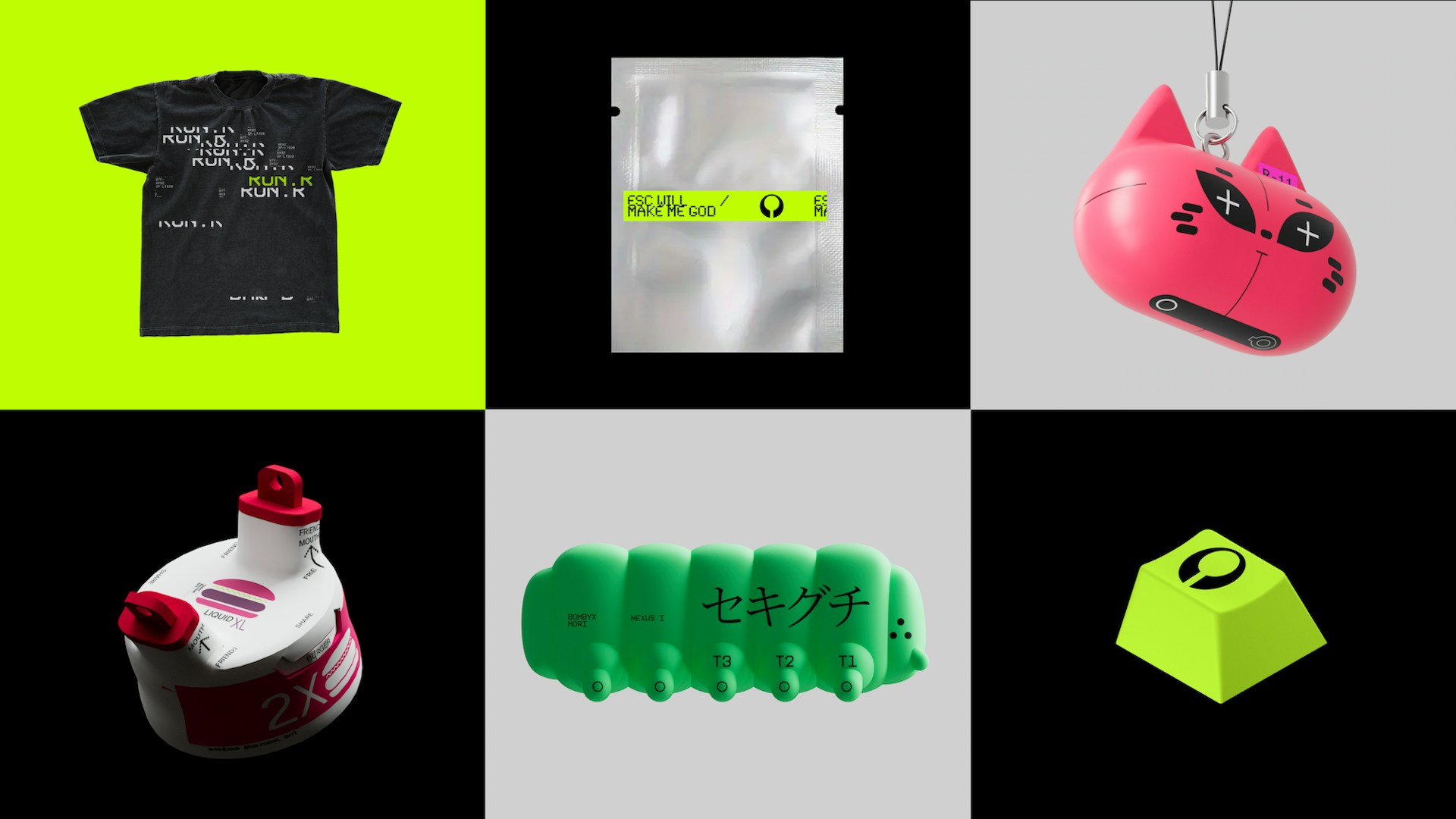
The Marathon merch line extended the brand identity into physical form. Hats, plush collectibles, and a Collector's Edition through the Bungie Store each carried the same visual DNA established years earlier, dark sci-fi geometry, faction iconography, and the restrained color palette that defines the game world. Physical products became proof of the brand's depth.
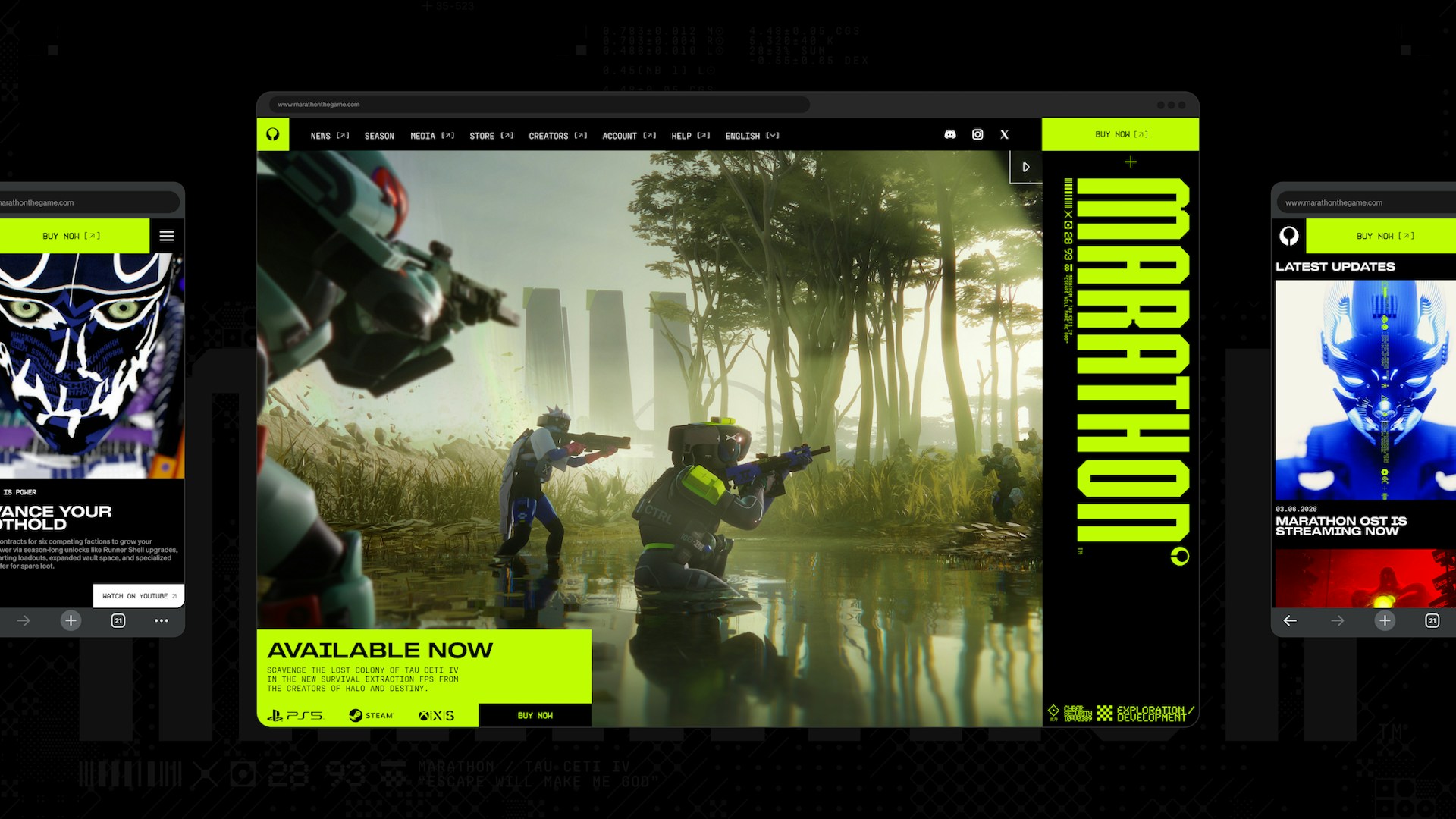
The game website itself reads as a world document rather than a product page. Fragmented transmissions, restricted zone data, and incomplete field surveys fill the navigation. Every design decision reinforces the fiction, the site does not sell the game so much as it extends the universe the Marathon brand identity was built to inhabit.
At launch, Marathon reached #2 Global Top Seller and #1 US Top Seller on Steam within hours, surpassing 100,000 concurrent players within 30 minutes. Whether those numbers hold long-term will depend on the game itself, but the groundwork laid by the Marathon brand identity work, and the community architecture Kurppa Hosk built around it, gave the game a cultural head start that no amount of traditional advertising could have manufactured.
Design: Kurppa Hosk | Source: Creative Review