by abduzeedo
Web design for conservation projects carries a specific burden. The work has to earn trust fast — trust in the science, trust in the mission, and trust in the organization behind it. For Vantara, an animal rescue and rehabilitation center in Jamnagar, India, that burden fell on San Francisco-based studio Clay. What they delivered is a web design project that strips back the noise and lets the story do the work.
Vantara was established by Reliance Industries in collaboration with Reliance Foundation, led by Anant Ambani. The scale is significant — the center spans vast grounds and operates as one of India's most ambitious wildlife conservation efforts, housing hundreds of animals across dedicated habitats and research zones. The digital challenge was translating that physical reality into a coherent, compelling online experience without losing the nuance of the mission.
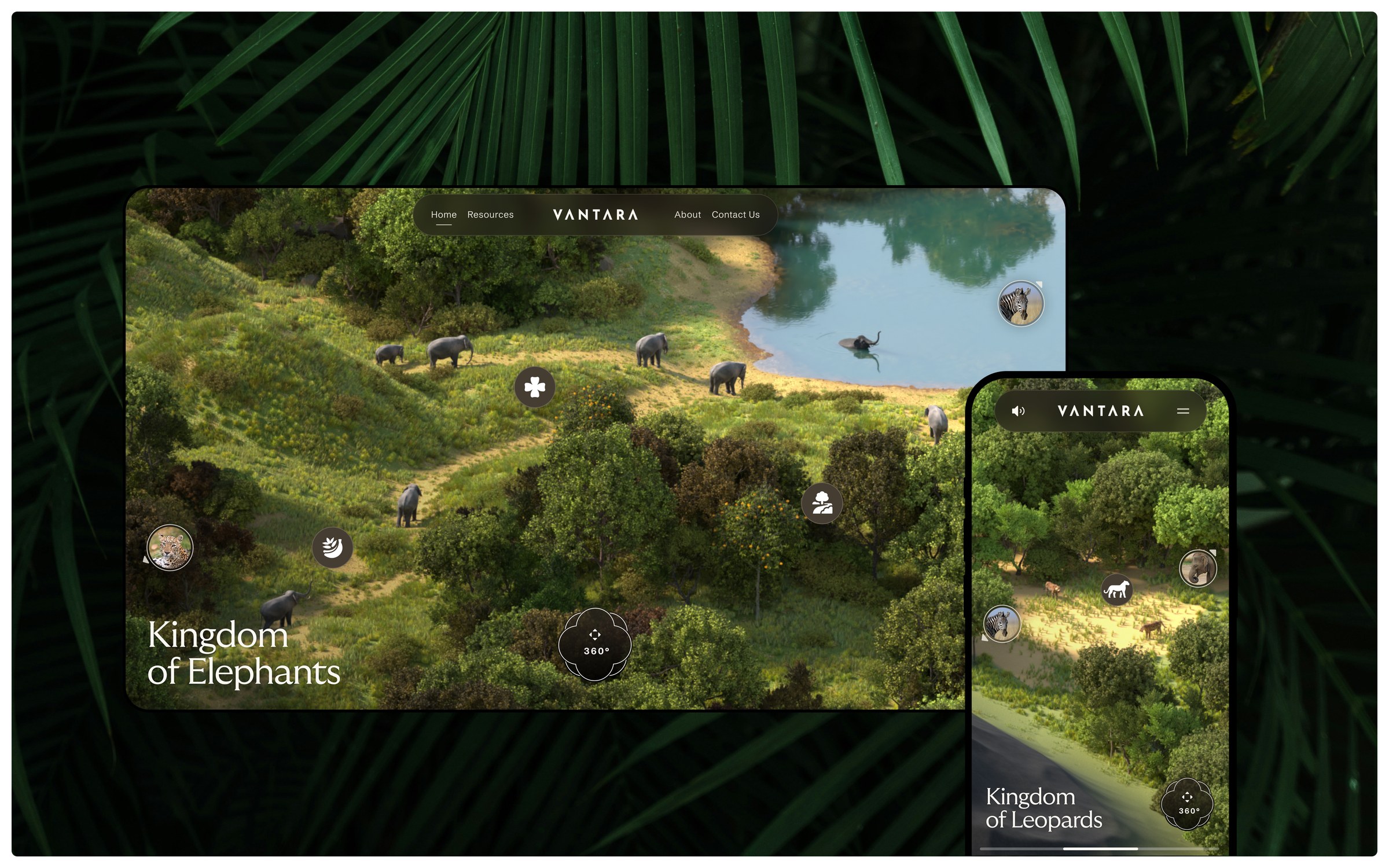
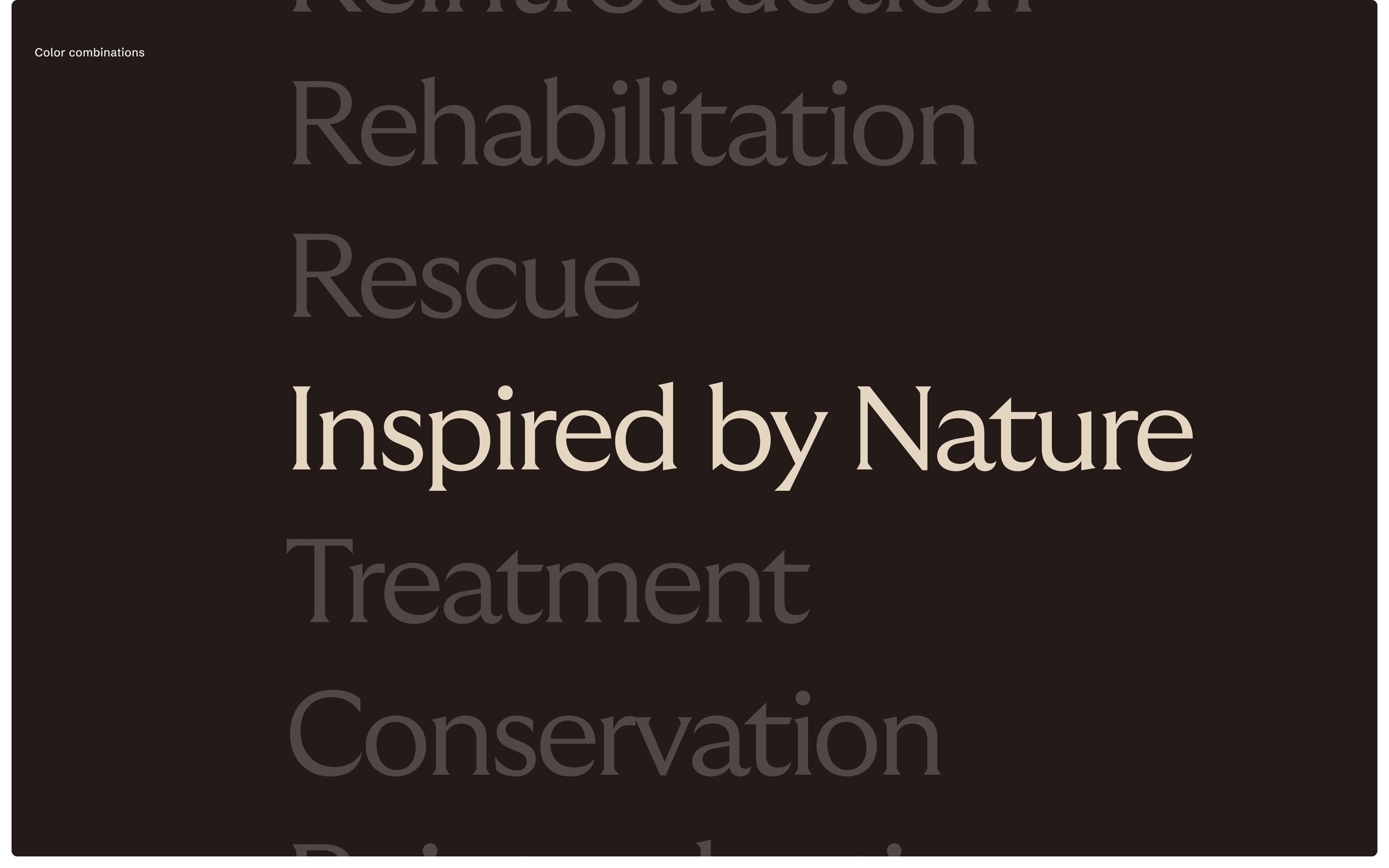
Clay's approach starts with color. The palette is rooted in earth — warm ochres, muted greens, soft browns. Nothing shouts. The tones sit close together, creating a quiet cohesion that reads as grounded rather than decorative. This is a deliberate restraint that signals the subject matter: nature, care, and long-term commitment. The color decisions alone communicate more about Vantara's ethos than most brand copy ever could.
Web Design That Balances Nature With Scientific Credibility
The icon system follows the same logic. Clay built a set of simplified shapes with rounded lines — forms that feel approachable without becoming cartoonish. Each icon reinforces the broader message of respect for animals, offering a visual shorthand that works across the site's educational sections, navigation cues, and content modules. The system is consistent without being rigid.
What separates this project from a standard nature-themed website is the 3D work. Clay produced detailed three-dimensional maps of Vantara's infrastructure — animal habitats, research zones, and facility layouts rendered with enough precision to serve as genuine informational tools. These aren't decorative flourishes. They give the site a scientific grounding and help users understand the physical scale and complexity of the operation. Researchers, students, and conservationists looking for credibility will find it here.
The typography follows a restrained hierarchy that keeps the reading experience clear. Longer editorial sections — positioning Vantara as a resource for researchers and scientists worldwide — need legible structure, and Clay delivers that without resorting to heavy typographic styling. The text-to-image balance across pages feels considered, not crowded.
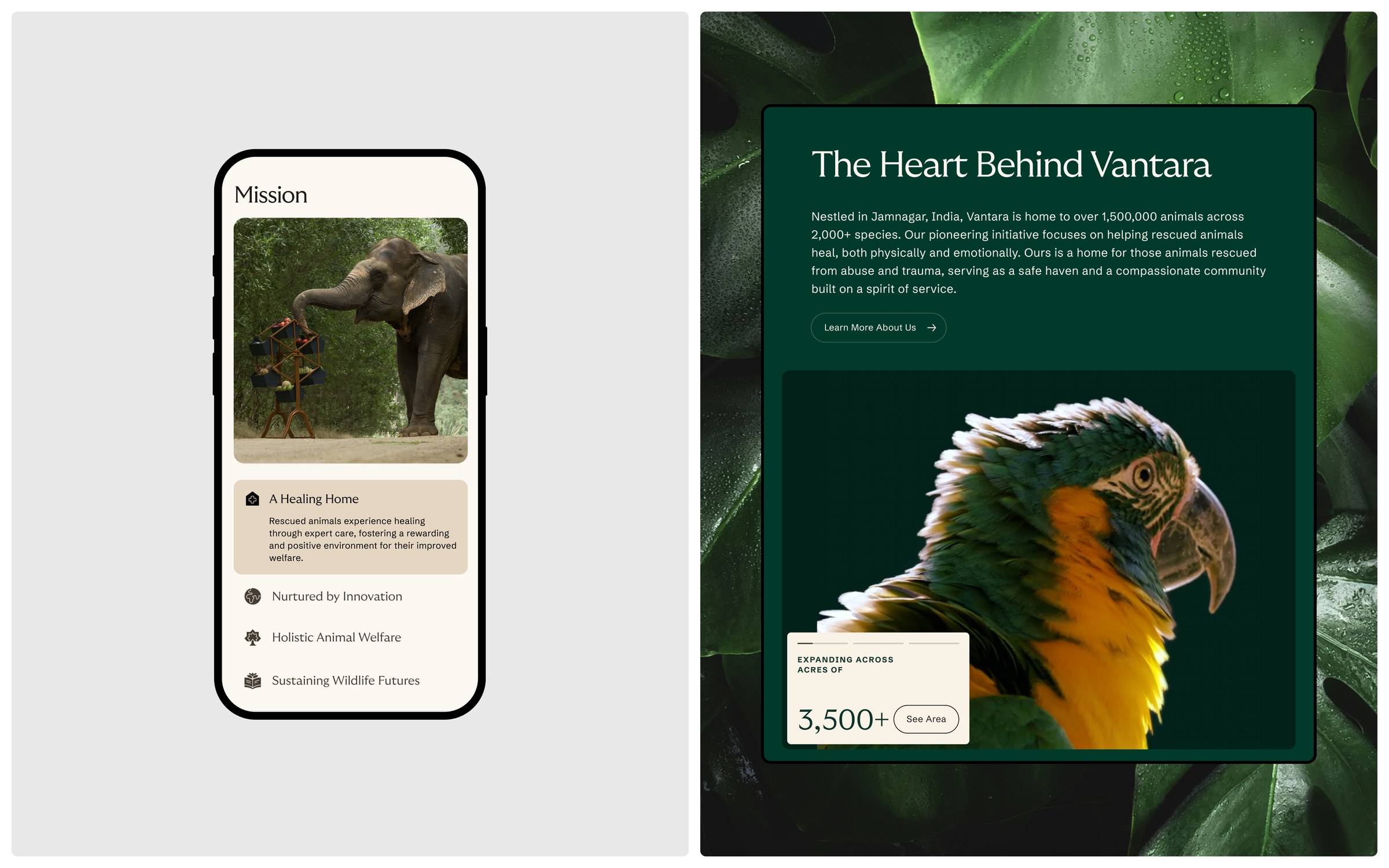
The project also produced a modular content system adaptable across multiple surfaces: the main website, learning platforms, annual reports, and publications. This is where the design thinking extends beyond screen craft into systems thinking. A single visual language that flexes across formats means Vantara's branding stays coherent as the organization grows and publishes across channels.
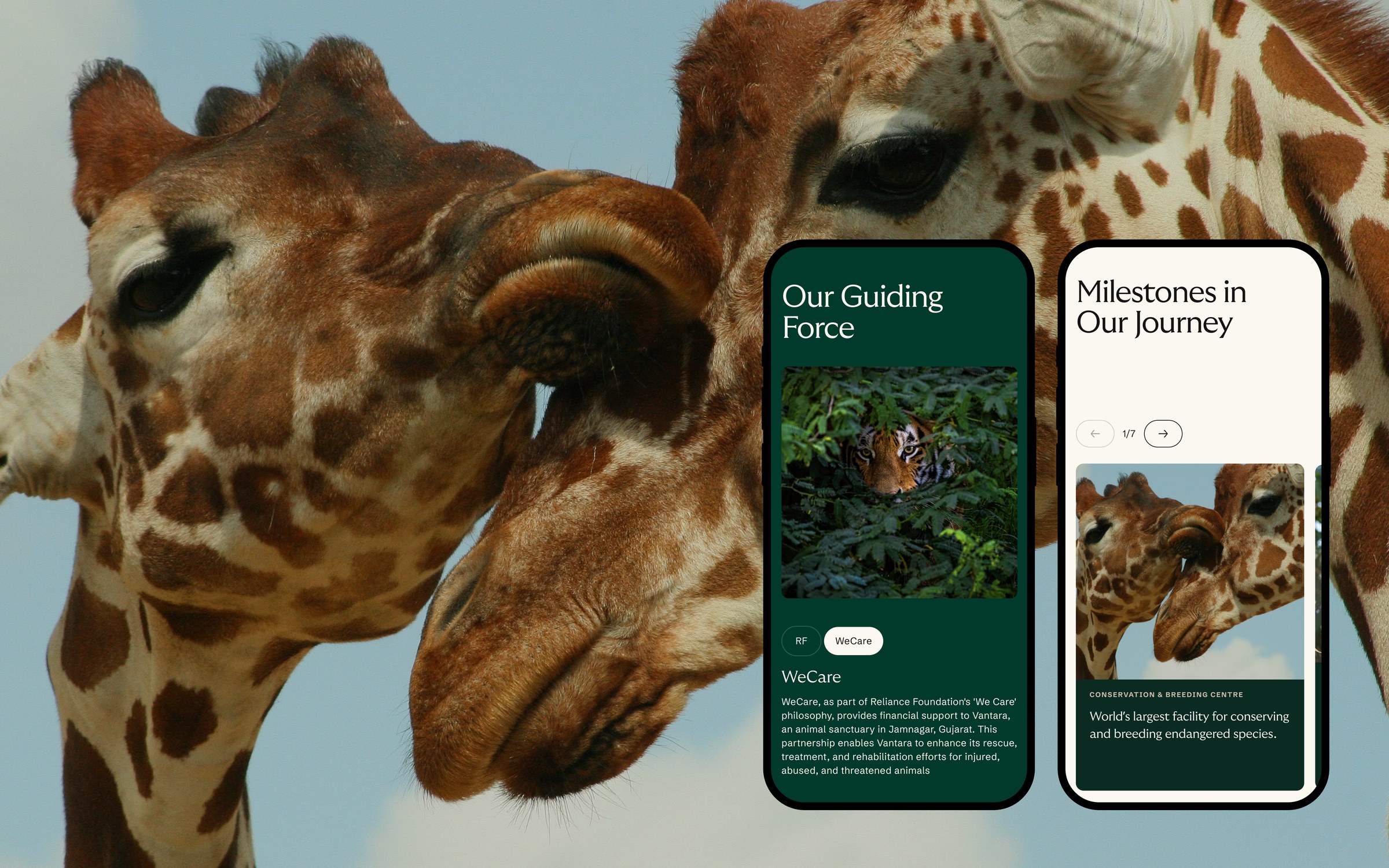
Clay's motion design work adds another layer to the web design. Video sequences capture the scale of the habitats and the textures of the natural environment — giving the experience a sense of place that static images alone couldn't provide. The motion is quiet and deliberate, matching the overall tone of the visual language.
The digital experience Clay built for Vantara succeeds because it never loses sight of what the project is actually for. This is not a brand exercise dressed up as conservation storytelling. The web design choices — from the muted palette to the 3D habitat maps to the modular system — serve the mission directly. That kind of discipline is harder to pull off than it looks, and it shows clearly in the finished work.